 Raj Kishore
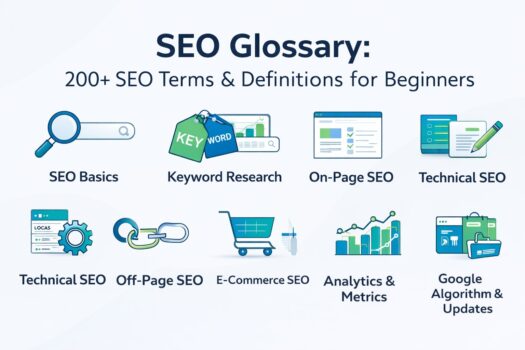
Search Engine Optimization often feels confusing, especially when you are new to digital marketing or trying to learn SEO from unreliable or overly technical sources. One of the biggest challenges beginners face is not strategy or tools, but understanding SEO terminology clearly and correctly. Without knowing what common SEO terms actually mean, it becomes difficult to apply SEO in real situations.
This SEO Glossary of 300+ terms is created to bridge that gap. It is written for beginners, freelancers, business owners, and learners in India who want clear, trustworthy, and practical explanations instead of complicated definitions. Each term in this glossary is explained using simple language, real-world context, and examples that reflect how SEO is used in actual projects today.
Unlike many glossaries that rely on generic or theoretical explanations, this guide is built from hands-on SEO experience. It focuses on how these terms are used while doing keyword research, creating content, fixing technical issues, analysing data, and responding to Google algorithm updates. Wherever possible, common mistakes are also explained so you can avoid costly errors early in your SEO journey.
SEO is constantly evolving, but the fundamentals remain the same. When you understand the language of SEO, you gain clarity, confidence, and control over your optimisation efforts. This glossary is designed to be a long-term reference, whether you are learning SEO for the first time or using it to support real business goals.
By the end of this guide, you will not just recognise SEO terms. You will understand how they connect, why they matter, and how to apply them correctly in real-world SEO work.
SEO Basics (Foundational SEO Terms)
Before diving into advanced SEO strategies, it is essential to understand the fundamentals. These core SEO terms form the backbone of how search engines work and how websites rank. In my hands-on experience working with Indian service businesses, blogs, and early-stage startups, every successful SEO campaign has started with a strong grasp of these basics. Without this foundation, even the best strategies fail to deliver consistent results.
1. Search Engine
A search engine is a software system that helps users find information on the internet by matching their search queries with relevant web pages. It scans billions of pages and shows results based on relevance, quality, and usefulness. In India, Google is the most widely used search engine, meaning most SEO efforts focus on how Google understands and ranks content. Search engines exist to help users find the best possible answer, not just any website.
2. Search Engine Optimization (SEO)
Search Engine Optimization, commonly known as SEO, is the process of improving a website so it appears more frequently and higher in organic search results. SEO includes content creation, technical improvements, keyword research, and building trust signals. The main goal of SEO is to attract relevant users who are actively searching for information, services, or products. Unlike paid ads, SEO focuses on long-term visibility and sustainable traffic growth.
3. Organic Search
Organic search refers to the unpaid listings that appear in search engine results based on relevance to a user’s query. These results are not influenced by advertising spend but by content quality, authority, and user satisfaction. Organic search traffic is valuable because users tend to trust these results more than ads. For informational searches, organic results often drive higher engagement and long-term traffic when content is helpful and accurate.
4. SERP (Search Engine Results Page)
The Search Engine Results Page, or SERP, is the page displayed by a search engine after a user enters a query. It can include organic results, paid ads, featured snippets, local map listings, images, and FAQs. SEO is not only about ranking higher but also about appearing in the right SERP features. Understanding SERP layouts helps optimise content for better visibility and higher click potential.
5. Crawling
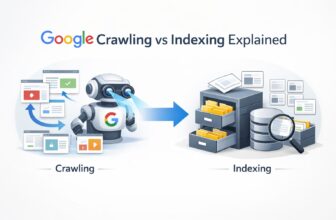
Crawling is the process where search engine bots visit web pages to discover new or updated content. These bots follow links to move from one page to another across the internet. Crawling is the first step before indexing and ranking. If a page cannot be crawled due to technical restrictions, search engines will not understand its content. Proper internal linking and technical setup help ensure smooth crawling.
6. Indexing
Indexing is the process of storing crawled web pages in a search engine’s database so they can appear in search results. Once a page is indexed, it becomes eligible to rank for relevant queries. Indexing does not happen automatically for every page. Pages can be excluded due to quality issues, duplication, or technical errors. Monitoring index status helps ensure important pages are visible to search engines.
7. Ranking
Ranking refers to the position a web page holds in search results for a specific keyword or query. Higher rankings usually result in more visibility and clicks. Ranking is influenced by multiple factors such as relevance, content quality, authority, and user experience. While rankings are important, they should always be evaluated alongside traffic quality and conversions. A high ranking without meaningful results does not guarantee SEO success.
8. Algorithm
An algorithm is a system of rules and signals used by search engines to decide which pages to show and in what order. It evaluates factors such as content relevance, trust, links, and page experience. Algorithms are designed to reward pages that best satisfy user intent. SEO success comes from aligning with algorithm guidelines rather than trying to manipulate them. Following best practices ensures stability across updates.
9. Google Algorithm Update
A Google algorithm update is a change made to improve search quality and reduce low-value or manipulative content. These updates can affect rankings and traffic suddenly. Some updates are minor, while others impact large portions of search results. Understanding updates helps SEO professionals diagnose traffic changes correctly. The right response is analysis and improvement, not panic-driven changes that can worsen performance.
10. White Hat SEO
White hat SEO refers to ethical optimization practices that follow search engine guidelines and focus on user benefit. This includes creating helpful content, improving site performance, and earning natural links. White hat SEO builds long-term trust and stable rankings. While results may take time, they are sustainable and less risky. This approach is recommended for businesses that want consistent growth without penalties.
11. Black Hat SEO
Black hat SEO involves unethical techniques used to manipulate rankings, such as buying spam links or using deceptive content. These methods may show short-term gains but carry high risk. Search engines actively penalize such practices, which can lead to ranking drops or complete removal from search results. Black hat SEO often causes long-term damage that is difficult to recover from, especially for new websites.
12. User Intent (Search Intent)
User intent refers to the reason behind a search query. It explains what the user is actually looking for, such as information, comparison, or a service. Search engines prioritise pages that match intent accurately. Understanding intent helps create the right type of content, whether educational or commercial. Ignoring intent often leads to poor rankings and low engagement, even if keywords are targeted correctly.
13. Keyword
A keyword is a word or phrase that users type into a search engine to find information. Keywords connect user searches with relevant content. Effective SEO involves choosing keywords that reflect real user intent and business relevance. Keywords are not just about volume but about understanding what users want. Targeting the right keywords helps attract the right audience instead of random traffic.
14. Long-Tail Keyword
A long-tail keyword is a longer, more specific search phrase with clearer intent. These keywords usually have lower search volume but less competition. Long-tail keywords are especially valuable for beginners and niche websites because they attract users who know exactly what they want. They often convert better because the search intent is more focused and specific compared to broad keywords.
15. Search Volume
Search volume is the estimated number of times a keyword is searched within a specific period, usually per month. It helps assess potential traffic opportunities. However, higher volume does not always mean better results. Many low-volume keywords have strong intent and higher conversion potential. Search volume should be evaluated together with competition and relevance, not used as the only decision factor.
16. Competition (Keyword Difficulty)
Competition, also known as keyword difficulty, indicates how hard it is to rank for a keyword based on existing competitors. High competition keywords are usually dominated by authoritative websites. Choosing keywords with realistic competition levels improves ranking success, especially for new or smaller sites. Ignoring competition often leads to wasted effort on keywords that are nearly impossible to rank for initially.
17. Click-Through Rate (CTR)
Click-through rate measures how many users click on a search result after seeing it. It is calculated as clicks divided by impressions. CTR shows how appealing and relevant a search result looks to users. Improving titles and descriptions can increase CTR without changing rankings. A strong CTR indicates good alignment between search intent and content presentation.
18. Bounce Rate
Bounce rate shows the percentage of users who leave a website after viewing only one page. A high bounce rate can indicate poor content relevance, slow loading speed, or mismatched intent. However, for informational pages, a bounce may simply mean the user found the answer quickly. Bounce rate should always be interpreted based on page purpose and user expectations.
19. Domain
A domain is the main address of a website that users type into a browser. Over time, domains build trust, authority, and search history. Older, well-maintained domains often perform better because they have established credibility. Changing a domain without proper SEO planning can cause traffic loss. Domain decisions should always consider branding, trust, and long-term SEO impact.
20. URL
A URL is the specific address of a webpage within a domain. SEO-friendly URLs are short, readable, and descriptive. Clean URLs help users understand page content and assist search engines in crawling and indexing. Poorly structured URLs with random characters or parameters can confuse both users and search engines. URL structure plays a small but important role in overall SEO clarity.
21. Index Coverage
Index coverage is a report that shows which pages of a website are indexed or excluded by Google. It helps identify technical or quality issues preventing pages from appearing in search results. Monitoring index coverage ensures important pages are accessible and low-value pages are handled correctly. Ignoring index coverage issues can silently limit a website’s organic visibility.
22. Manual Action
A manual action is a penalty applied by Google after a human review identifies guideline violations. It can affect individual pages or the entire website. Manual actions require corrective action and a reconsideration request. Unlike algorithmic drops, manual actions are clearly reported. Resolving them is critical, as ignoring a manual action can completely block organic growth.
23. SEO Audit
An SEO audit is a comprehensive evaluation of a website’s performance, covering technical health, content quality, and off-page signals. It identifies issues that prevent growth, such as crawl errors or weak content. Audits provide direction, not results by themselves. Real improvement happens only when audit findings are implemented correctly and prioritised based on impact.
24. SEO Strategy
An SEO strategy is a planned approach to achieving specific SEO goals such as traffic growth, lead generation, or brand visibility. It defines target keywords, content types, technical priorities, and timelines. Without strategy, SEO becomes random and inefficient. A good strategy aligns business goals with user intent and search behavior, ensuring every action supports long-term outcomes.
25. SEO-Friendly Website
An SEO-friendly website is built to be easily crawled, indexed, and understood by search engines while offering a smooth user experience. It includes fast loading speed, mobile responsiveness, clean structure, and accessible content. SEO-friendly design creates a strong foundation for all optimisation efforts. Content alone cannot perform well if the website’s technical and structural basics are weak.
Keyword Research (Essential SEO Terms)
Keyword research is where SEO strategy truly begins. In my experience working with Indian businesses and content-driven websites, 90% of ranking failures happen because the wrong keywords were chosen, not because SEO execution was poor.
26. Keyword Research
Keyword research is the process of identifying and analysing the search terms people use in search engines to find information, services, or products. It helps you understand real search demand and user intent instead of guessing what people might search for. In SEO, keyword research guides content planning, page creation, and optimisation priorities. Good keyword research ensures your content aligns with how users actually search, not how businesses assume they search.
27. Seed Keyword
A seed keyword is a basic, broad term used as a starting point to discover more specific and related keyword ideas. It represents the core topic of your content or business. Seed keywords help expand keyword lists by generating variations, questions, and long-tail phrases. Choosing the right seed keyword ensures keyword research stays relevant and focused. Poor seed keyword selection often leads to irrelevant or overly competitive keyword ideas.
28. Search Intent
Search intent refers to the actual purpose behind a user’s search query. It explains whether the user wants information, a comparison, or a service. Search engines prioritise pages that best match this intent. Understanding search intent helps create the right type of content for each query. Even well-written pages may fail to rank if they do not satisfy the intent behind the search.
29. Informational Keyword
Informational keywords are used when users want answers, explanations, or guidance rather than services or products. These keywords are common at the awareness stage of the user journey. In SEO, informational keywords help build trust, authority, and early engagement. Although they may not convert immediately, they support long-term growth by introducing users to your brand and guiding them toward future actions.
30. Commercial Keyword
Commercial keywords indicate that users are researching services or products and are closer to making a decision. These keywords often include words like best, top, or review. In SEO, commercial keywords are valuable because they attract users with higher conversion potential. Ranking for them usually requires strong content, authority, and trust signals, as competition is often high in this category.
31. Transactional Keyword
Transactional keywords show strong intent to take action, such as buying, hiring, or signing up. These searches are closest to revenue generation. In SEO, transactional keywords should usually be targeted with focused landing pages rather than blog posts. Proper optimisation of transactional keywords can directly impact sales or leads, but they require strong credibility and clear calls to action to perform well.
32. Navigational Keyword
Navigational keywords are used when users want to reach a specific website, platform, or brand. These searches usually include brand names or specific page references. In SEO analysis, navigational keywords help measure brand awareness and recognition. They are generally not targeted for growth content because users already know where they want to go, making them less useful for acquiring new audiences.
33. Long-Tail Keyword
A long-tail keyword is a highly specific search phrase that usually contains multiple words. These keywords often have lower search volume but clearer intent. In SEO, long-tail keywords are easier to rank for and tend to convert better because users know exactly what they want. They are especially valuable for new websites, niche topics, and businesses targeting specific audiences or locations.
34. Short-Tail Keyword
Short-tail keywords are broad search terms that usually consist of one or two words. These keywords have high search volume but extremely high competition. In SEO, short-tail keywords are difficult to rank for and often attract mixed intent traffic. They are better suited for established, authoritative websites. Targeting short-tail keywords too early can lead to slow progress and wasted effort.
35. Keyword Difficulty (KD)
Keyword difficulty is a metric that estimates how challenging it is to rank for a specific keyword based on existing competitors. It considers factors such as domain strength and backlink profiles of top-ranking pages. In SEO, keyword difficulty helps set realistic expectations and prioritise achievable opportunities. Ignoring difficulty often leads to targeting keywords that are nearly impossible to rank for, especially for new or smaller websites.
36. Search Volume
Search volume represents the average number of times a keyword is searched within a given time period. It helps estimate potential traffic but does not guarantee results. In SEO, search volume should be balanced with intent and competition. Many low-volume keywords can collectively drive meaningful traffic and conversions. Relying only on high-volume keywords often leads to poor engagement and low conversion rates.
37. CPC (Cost Per Click)
Cost Per Click is the amount advertisers pay for each click in paid search campaigns. In SEO, CPC is used as an indicator of commercial value rather than cost. High CPC keywords often signal strong buying intent and profitability. However, CPC should not be the only factor in keyword selection. Some low-CPC keywords still provide excellent organic traffic and long-term value.
38. Keyword Gap
Keyword gap refers to keywords that competitors rank for but your website does not. Analysing keyword gaps helps identify missed opportunities and content ideas. In SEO, keyword gap analysis is used to prioritise topics that already have proven demand. However, these insights should be adapted to your audience and goals, not copied blindly without adding unique value or context.
39. Keyword Clustering
Keyword clustering is the practice of grouping related keywords under a single page or topic. This approach helps avoid creating multiple pages targeting the same intent. In SEO, clustering improves topical relevance and reduces keyword cannibalization. It also allows pages to rank for multiple related queries instead of competing against themselves. Poor clustering often leads to scattered content and weak rankings.
40. Primary Keyword
A primary keyword is the main search term a page is optimised to rank for. It defines the core topic and focus of the page. In SEO, selecting a clear primary keyword helps guide content structure, headings, and optimisation. Each page should have only one primary keyword to maintain clarity. Targeting multiple primary keywords on one page often confuses search engines.
41. Secondary Keyword
Secondary keywords are closely related terms that support the primary keyword. They help expand topical coverage and capture additional search variations. In SEO, secondary keywords improve relevance and allow pages to rank for multiple related queries naturally. Over-optimising secondary keywords can harm readability, so they should be integrated naturally within helpful content rather than forced into every section.
42. Keyword Cannibalization
Keyword cannibalization occurs when multiple pages on the same website target the same keyword or intent. This confuses search engines about which page to rank and often results in weaker performance for all pages involved. In SEO, cannibalization is resolved by consolidating content, redefining intent, or improving internal linking. Preventing cannibalization is essential for maintaining strong and stable rankings.
43. Seasonal Keyword
Seasonal keywords experience increased search demand during specific times of the year. These keywords are common in industries like education, travel, and immigration. In SEO, understanding seasonality helps plan content in advance so pages are indexed and ranking before demand peaks. Publishing seasonal content too late often results in missed opportunities and reduced visibility.
44. Geo-Targeted Keyword
Geo-targeted keywords include location-specific terms such as city or region names. These keywords are critical for businesses serving specific areas. In SEO, geo-targeted keywords help attract local and high-intent users. Proper optimisation requires dedicated location pages and accurate business information. Overusing location names unnaturally can harm readability and user trust.
45. Branded Keyword
Branded keywords contain a business or product name and are used by users who already know the brand. These keywords reflect brand awareness and trust. In SEO, branded keyword performance helps measure reputation and demand. Monitoring branded searches is important for protecting visibility and understanding customer interest. Ignoring branded keywords can result in missed insights about brand growth.
46. Non-Branded Keyword
Non-branded keywords do not include brand names and are used by users who are still discovering options. These keywords are essential for reaching new audiences. In SEO, non-branded keywords drive organic growth and awareness. They often require stronger content and optimisation because competition is higher. Focusing only on branded traffic limits long-term expansion and discovery.
47. Search Trend
Search trend shows how keyword interest rises or falls over time. Analysing trends helps identify growing topics and declining interest. In SEO, search trends support future-focused content planning and help avoid outdated topics. Publishing content aligned with rising trends improves relevance and timing. Ignoring trends can lead to investing effort in topics that no longer attract users.
48. Keyword Intent Mapping
Keyword intent mapping is the process of assigning keywords to the most suitable pages based on user intent. Informational keywords are mapped to blogs, while transactional keywords are mapped to service pages. In SEO, intent mapping improves rankings and conversions by ensuring content matches user expectations. Poor mapping often leads to low engagement and ranking struggles.
49. Keyword Prioritization
Keyword prioritization is the process of selecting which keywords to target first based on relevance, competition, and potential value. In SEO, prioritisation helps focus resources on keywords that deliver the best return. Attempting to target too many keywords at once spreads efforts thin. A focused keyword strategy improves efficiency and produces measurable results faster.
50. Zero-Volume Keyword
Zero-volume keywords are search terms that show little or no reported search volume in tools. Despite this, they can still attract highly targeted traffic. In SEO, these keywords often reflect specific questions or niche needs. They are valuable for building authority and serving unique audiences. Ignoring zero-volume keywords can mean missing high-intent users with specific requirements.
On-Page SEO (30 Essential SEO Terms)
On-page SEO focuses on everything you control inside a webpage. In real SEO projects across Indian blogs, service websites, and SaaS pages, on-page fixes alone often deliver 20–40% traffic improvements without backlinks.
51. On-Page SEO
On-page SEO refers to the practice of optimising elements within a single webpage to improve search visibility and user experience. This includes content quality, headings, internal links, images, and HTML structure. On-page SEO helps search engines understand what a page is about and how useful it is for users. Strong on-page optimisation creates a solid foundation for rankings and should always be addressed before focusing heavily on backlinks or off-page activities.
52. Title Tag
A title tag is the clickable headline shown in search engine results. It is one of the most important on-page SEO elements because it influences both rankings and click-through rate. A well-written title clearly communicates the page topic and attracts user attention. Title tags should be concise, relevant, and readable. Overloading titles with keywords or exceeding recommended length can reduce effectiveness and lower user trust.
53. Meta Description
A meta description is a short summary displayed below the title tag in search results. While it does not directly affect rankings, it strongly influences click-through rate. A good meta description explains what users will gain from clicking the page and matches search intent. Each page should have a unique meta description. Duplicating descriptions across pages can reduce clarity and limit search performance.
54. H1 Tag
The H1 tag is the main heading of a webpage and usually represents its primary topic. It helps search engines and users understand what the page is about at a glance. A clear and focused H1 improves content structure and relevance. Each page should typically have one H1 tag. Using multiple H1s without purpose can confuse content hierarchy and weaken clarity.
55. Header Tags (H2 to H6)
Header tags from H2 to H6 are used to structure content into sections and sub-sections. They improve readability, organisation, and user experience. Search engines use headers to understand content hierarchy and topic flow. Proper use of header tags makes long content easier to scan. Skipping heading levels or using them only for styling can reduce structural clarity.
56. URL Structure
URL structure refers to how a webpage address is formatted. SEO-friendly URLs are short, descriptive, and easy to read for both users and search engines. Clean URLs help improve crawlability and user trust. Including relevant words in URLs provides context, while unnecessary parameters can create confusion. Poor URL structure can affect indexing and overall usability.
57. Internal Linking
Internal linking involves linking one page of a website to another page within the same domain. It helps distribute authority, improve crawlability, and guide users to related content. Effective internal linking strengthens topical relevance and keeps users engaged longer. Overusing exact-match anchor text or linking without purpose can reduce effectiveness and create poor user experience.
58. Anchor Text
Anchor text is the clickable text used in a hyperlink. It provides context about the linked page to both users and search engines. Descriptive anchor text helps search engines understand the relationship between pages. Using varied and natural anchor text improves internal and external linking quality. Repeating the same anchor text excessively can appear unnatural and reduce SEO value.
59. Content Optimization
Content optimization is the process of improving content to make it more relevant, useful, and clear for users and search engines. This includes improving structure, adding examples, updating information, and enhancing readability. Well-optimised content satisfies search intent and performs better over time. Focusing only on keyword placement without improving actual value often leads to poor engagement and rankings.
60. Keyword Placement
Keyword placement refers to where and how keywords appear within content. Important locations include headings, the introduction, body content, and image alt text. Proper placement helps search engines identify the page topic. Keywords should always be used naturally. Forcing keywords into sentences can harm readability and user trust, which negatively impacts overall SEO performance.
61. Keyword Density
Keyword density is the percentage of times a keyword appears compared to total word count. While keyword presence matters, there is no ideal percentage to target. Modern SEO focuses more on relevance and intent rather than repetition. Overusing keywords can lead to over-optimisation and poor readability. Natural language and topic coverage are more important than numeric density.
62. LSI Keywords
LSI keywords are related terms and phrases that provide additional context to the main topic. They help search engines better understand content relevance. These terms naturally appear when content is written thoroughly. LSI keywords are not mandatory keywords to insert deliberately. Treating them as required checklists often results in unnatural writing and reduced content quality.
63. Image Alt Text
Image alt text is a written description of an image used for accessibility and SEO. It helps visually impaired users understand images and allows search engines to interpret image content. Alt text also supports image search visibility. Good alt text is descriptive and relevant. Leaving alt text empty or stuffing it with keywords reduces its usefulness and accessibility value.
64. Image Optimization
Image optimization involves improving images for size, quality, and relevance. Properly optimised images load faster, improve user experience, and support SEO. Techniques include compression, correct file formats, and descriptive file names. Large, uncompressed images slow down pages and negatively affect performance. Image optimization is especially important for mobile users and content-heavy pages.
65. Page Speed
Page speed measures how quickly a webpage loads for users. Faster pages provide better user experience and are favoured by search engines. Slow-loading pages often lead to higher bounce rates and lower engagement. Page speed optimisation includes image compression, code optimisation, and reliable hosting. Mobile speed is especially critical due to mobile-first indexing.
66. Mobile-Friendliness
Mobile-friendliness refers to how well a webpage performs and displays on mobile devices. With most users accessing the internet on smartphones, mobile usability is essential. A mobile-friendly page adjusts layout, text, and navigation for smaller screens. Google evaluates pages using mobile-first indexing, so poor mobile design can negatively impact rankings even if desktop performance is strong.
67. Content Freshness
Content freshness refers to how recently content has been updated or reviewed. For many topics, updated information performs better in search results. Refreshing content helps maintain relevance and accuracy. Content does not always need full rewrites, but regular updates signal usefulness. Publishing content once and never revisiting it often leads to gradual ranking decline.
68. Duplicate Content
Duplicate content occurs when similar or identical content appears on multiple URLs. This can confuse search engines about which version to rank. Duplicate content often arises from technical issues or repeated definitions. While not always a penalty, it can dilute ranking signals. Proper canonicalisation and content consolidation help manage duplicate content effectively.
69. Canonical Tag
A canonical tag tells search engines which version of a page should be treated as the primary one. It is used to manage duplicate or similar content across multiple URLs. Canonical tags help consolidate ranking signals and prevent indexing confusion. Incorrect canonical implementation can accidentally remove important pages from search results, so careful setup is essential.
70. Readability
Readability measures how easy content is to read and understand. Factors include sentence length, word choice, structure, and formatting. High readability improves engagement and retention, especially for beginners. Clear language, short paragraphs, and bullet points make content more accessible. Overusing jargon or complex sentences can reduce comprehension and discourage users from continuing.
71. UX (User Experience)
User experience refers to how users interact with and feel about a webpage. Good UX includes clear navigation, fast loading, readable content, and intuitive layout. Search engines consider engagement signals that reflect UX quality. Poor UX can lead to high exit rates and lower satisfaction. Designing pages for user comfort directly supports SEO performance.
72. Engagement Metrics
Engagement metrics measure how users interact with content. Common metrics include time on page, scroll depth, and interaction events. These signals help evaluate whether content meets user expectations. High engagement often indicates usefulness and relevance. Ignoring engagement data can lead to missed improvement opportunities, even if traffic numbers appear healthy.
73. Table of Contents
A table of contents is a clickable list of page sections that helps users navigate long content easily. It improves user experience by allowing quick access to specific topics. Search engines may also use structured tables of contents for enhanced results. Tables of contents should be updated whenever content changes to maintain accuracy and usability.
74. Featured Snippet Optimization
Featured snippet optimization focuses on structuring content so it can appear at the top of search results in position zero. Clear definitions, concise answers, and structured formatting increase chances of selection. Featured snippets improve visibility and authority. Ignoring formatting, clarity, or direct answers reduces the likelihood of earning these prominent placements.
75. Schema Markup (On-Page)
Schema markup is structured data added to webpages to help search engines understand content better. On-page schema can enhance how pages appear in search results, such as showing FAQs or breadcrumbs. Proper schema improves visibility and click-through rate. Using incorrect schema types or misleading data can result in errors and loss of rich result eligibility.
76. Content-Length
Content length refers to the total word count of a page. Longer content often allows deeper topic coverage, which can support authority and relevance. However, length alone does not guarantee quality. Content should be as long as necessary to satisfy intent. Writing long pages without adding value can harm readability and user trust.
77. Keyword Cannibalization (On-Page)
On-page keyword cannibalization happens when multiple pages on a website target the same keyword or intent. This causes internal competition and weakens ranking potential. Search engines may struggle to choose the best page to rank. Consolidating content or clarifying page focus helps resolve cannibalization and improves overall performance.
78. HTML Optimization
HTML optimization involves structuring page code in a clean and logical way. Proper use of tags helps search engines crawl and interpret content efficiently. Well-structured HTML improves accessibility and technical clarity. Messy or excessive code can slow down pages and create crawling issues. Clean HTML supports both SEO and user experience.
79. Content Relevance
Content relevance measures how well a page matches the user’s search intent and expectations. Relevant content directly answers the query and provides appropriate depth. Search engines prioritise relevance as a core ranking factor. Generic or unfocused content often struggles to rank. Clear topic alignment improves engagement, trust, and long-term performance.
80. Above-the-Fold Content
Above-the-fold content is the portion of a webpage visible without scrolling. It creates the first impression for users and influences engagement. Clear introductions, headings, and value statements help users quickly understand the page purpose. Hiding key information too far down the page can reduce interest and increase exits, especially for new visitors.
81. Technical SEO
Technical SEO focuses on improving a website’s underlying infrastructure so search engines can crawl, index, and understand pages correctly. It includes site speed, mobile usability, indexing control, and error handling. Even the best content cannot perform well if technical barriers block access. Strong technical SEO creates a stable foundation that allows content and links to deliver results consistently over time.
82. Crawling
Crawling is the process by which search engine bots discover web pages by following links and accessing URLs. It is the first step before indexing and ranking. If pages are blocked, slow, or poorly linked, crawlers may miss them. Ensuring clean internal linking and correct technical settings helps crawlers efficiently discover important pages across a website.
83. Indexing
Indexing is the process of storing crawled pages in a search engine’s database so they can appear in search results. A page must be indexed before it can rank. Pages may fail to index due to quality issues, duplication, or technical errors. Monitoring indexing status helps ensure that valuable pages are visible and eligible for organic traffic.
84. Crawl Budget
Crawl budget refers to the number of pages a search engine is willing to crawl on a website within a given timeframe. Large websites with many URLs need efficient crawl budget management. Optimising crawl budget ensures that important pages are crawled regularly while low-value or duplicate URLs do not waste resources. Poor crawl budget usage can delay indexing and updates.
85. Robots.txt
Robots.txt is a file that instructs search engine bots on which pages or sections they are allowed to crawl. It is commonly used to block admin areas, duplicate pages, or low-value content. While powerful, incorrect robots.txt rules can block critical resources. Careful configuration is essential to avoid unintentionally preventing important pages from being crawled.
86. XML Sitemap
An XML sitemap is a file that lists important URLs on a website to help search engines discover content more efficiently. It acts as a roadmap for crawlers, especially for new or large sites. Submitting a sitemap helps search engines find pages faster, but it does not guarantee indexing. Including only indexable and high-quality URLs is essential.
87. URL Parameter
URL parameters are extra values added to URLs for tracking, sorting, or filtering purposes. While useful for analytics and user experience, parameters can create multiple URLs with similar content. This may lead to duplication and crawl inefficiencies. Proper handling through canonical tags or parameter settings helps prevent indexing issues and preserves ranking signals.
88. Canonical Tag
A canonical tag tells search engines which version of a page should be treated as the primary one when multiple similar URLs exist. It helps consolidate ranking signals and prevent duplicate content confusion. Canonical tags are commonly used on product variants or filtered pages. Incorrect canonical placement can remove important pages from search results, so accuracy matters.
89. Duplicate Content
Duplicate content occurs when the same or very similar content is accessible through multiple URLs. This can confuse search engines and dilute ranking signals. Duplicate content often results from technical issues like URL variations or pagination. While not always penalised, it can limit performance. Proper canonicalisation and content consolidation help manage duplication effectively.
90. HTTP vs HTTPS
HTTP and HTTPS are protocols used to transfer data between a browser and a server. HTTPS is the secure version that encrypts data. Search engines prefer HTTPS because it improves security and user trust. Migrating to HTTPS is an important technical SEO step. Improper migrations can cause mixed content issues that affect performance and credibility.
91. SSL Certificate
An SSL certificate enables HTTPS by encrypting data exchanged between users and a website. It protects sensitive information such as forms and login details. SSL certificates build trust and are a basic security requirement. Search engines consider HTTPS a positive ranking signal. Expired or misconfigured SSL certificates can cause browser warnings and reduce user confidence.
92. Mobile-First Indexing
Mobile-first indexing means search engines primarily use the mobile version of a website for indexing and ranking. Since most users browse on mobile devices, mobile usability is critical. A site that performs well on desktop but poorly on mobile may struggle in search results. Responsive design and mobile optimisation are essential for modern SEO success.
93. Page Speed
Page speed measures how quickly a webpage loads for users. Faster pages provide better user experience and tend to perform better in search results. Slow pages often lead to higher exit rates and lower engagement. Page speed optimisation includes image compression, efficient code, and reliable hosting. Mobile page speed is especially important due to mobile-first indexing.
94. Core Web Vitals
Core Web Vitals are a set of user experience metrics that measure loading performance, interactivity, and visual stability. These metrics reflect how users experience a page in real conditions. Improving Core Web Vitals supports both rankings and user satisfaction. Regular monitoring is important because site changes can impact performance over time.
95. Server Response Time
Server response time is the amount of time a server takes to respond to a browser or crawler request. Slow response times can affect crawl efficiency and page speed. Poor hosting or overloaded servers often cause delays. Optimising server response time improves technical performance and ensures search engines can crawl pages efficiently and users receive content quickly.
96. 404 Error
A 404 error occurs when a requested page cannot be found on a website. This usually happens when pages are deleted or URLs change without proper redirects. Excessive 404 errors harm user experience and waste crawl resources. Important pages that return 404 should be redirected to relevant alternatives to preserve traffic and link value.
97. 301 Redirect
A 301 redirect permanently sends users and search engines from one URL to another. It is used when pages move or URLs change. Proper 301 redirects help preserve link equity and rankings. They ensure users reach the correct content seamlessly. Using the wrong redirect type can result in lost authority and indexing issues.
98. 302 Redirect
A 302 redirect indicates a temporary URL change. It tells search engines that the original page may return. 302 redirects are useful for short-term situations like maintenance or temporary campaigns. Using 302 redirects for permanent changes can confuse search engines and prevent proper transfer of ranking signals.
99. Redirect Chain
A redirect chain occurs when a URL redirects through multiple steps before reaching the final page. Long redirect chains slow down page loading and reduce crawl efficiency. They can also weaken link equity transfer. Cleaning up redirect chains improves performance and ensures search engines and users reach the destination page quickly.
100. Broken Link
A broken link points to a page that no longer exists or returns an error. Broken links create poor user experience and waste crawl resources. Internal broken links are especially harmful because they disrupt site navigation. Regularly auditing and fixing broken links helps maintain technical health and improves overall usability.
101. JavaScript SEO
JavaScript SEO involves optimising websites that rely heavily on JavaScript for content rendering. Some content may not be immediately visible to search engine crawlers. Proper rendering, server-side rendering, or hydration techniques help ensure search engines can access content. Assuming all JavaScript content is indexed correctly can lead to visibility issues.
102. Rendered Page
A rendered page is the fully loaded version of a webpage after JavaScript execution. Search engines index rendered content rather than raw HTML for many modern sites. Reviewing rendered pages helps confirm that important content is visible to crawlers. Content hidden behind scripts or delayed loading may not be indexed properly.
103. Structured Data
Structured data is code added to webpages to help search engines understand content meaning more clearly. It enables enhanced search results such as FAQs or breadcrumbs. Structured data improves visibility and presentation but does not guarantee rankings. Accurate implementation is essential, as incorrect markup can result in errors or loss of eligibility.
104. Schema Markup
Schema markup is a specific type of structured data that follows a defined vocabulary. It is often implemented using JSON format. Schema markup helps search engines interpret page context and display rich results. Choosing the correct schema type is important. Misusing schema or adding misleading data can cause validation issues.
105. Pagination
Pagination divides content across multiple pages, such as product listings or blog archives. Proper pagination helps manage large content sets and user navigation. Poor pagination structure can hinder crawling and hide deeper pages. Clear internal linking and logical structure ensure that paginated pages remain accessible and indexed efficiently.
106. Faceted Navigation
Faceted navigation allows users to filter content by attributes like price, size, or category. While useful for user experience, it can generate many URL combinations. Without control, this can cause duplication and crawl waste. Managing faceted navigation through noindex rules or canonicals helps balance usability and SEO.
107. Log File Analysis
Log file analysis involves reviewing server logs to understand how search engine bots interact with a website. It shows which pages are crawled, how often, and where resources are wasted. This provides advanced insights beyond standard tools. Log analysis is especially valuable for large websites where crawl efficiency directly affects indexing and performance.
108. Index Coverage Report
The index coverage report shows which pages are indexed, excluded, or experiencing errors. It helps identify issues that prevent pages from appearing in search results. Regular review of this report ensures important pages are indexed correctly. Ignoring warnings or exclusions can silently limit organic visibility and growth.
109. Hreflang
Hreflang is a tag used to indicate language or regional targeting for pages with similar content. It helps search engines serve the correct version to users in different regions. Proper hreflang implementation prevents wrong country or language pages from ranking. Incorrect setup can cause indexing confusion and traffic loss.
110. Website Architecture
Website architecture refers to how pages are structured and linked together. A clear hierarchy helps search engines crawl content efficiently and helps users navigate easily. Good architecture reduces crawl depth and improves topical relevance. Deep or confusing structures can hide important pages and weaken overall SEO performance.
Off-Page SEO (30 Essential SEO Terms)
Off-page SEO focuses on signals outside your website that build authority, trust, and credibility. In real SEO campaigns for Indian businesses, off-page SEO is often the deciding factor once on-page and technical SEO are solid.
111. Off-Page SEO
Off-page SEO refers to all optimisation activities performed outside your website to improve its authority, trust, and rankings. These activities mainly include link building, brand mentions, and digital PR. Search engines use off-page signals to judge how credible and popular a website is across the internet. Strong off-page SEO shows that others trust your content. Ignoring off-page SEO often limits growth, even if on-page and technical SEO are strong.
112. Backlink
A backlink is a link from another website pointing to your website. It acts as a vote of confidence, signaling to search engines that your content is valuable. Backlinks from relevant and authoritative websites carry more weight than random links. In SEO, backlinks are one of the strongest ranking factors. However, low-quality or spammy backlinks can harm rankings instead of helping them.
113. Referring Domain
A referring domain is a unique website that links to your site, regardless of how many links it provides. Having backlinks from multiple referring domains is generally more valuable than many links from a single site. Search engines consider domain diversity a sign of broader trust and popularity. Focusing only on the number of backlinks without considering referring domains often leads to misleading SEO analysis.
114. Link Building
Link building is the process of acquiring backlinks from other websites to improve authority and rankings. Ethical link building focuses on earning links through valuable content, relationships, and outreach. In SEO, link building supports trust and competitiveness. Automated or manipulative link building methods may provide short-term gains but often result in penalties or long-term damage.
115. Domain Authority (DA)
Domain Authority is a third-party metric that predicts how well a website may rank in search results. It is based on factors such as backlink quantity and quality. DA is useful for comparison, not as a ranking factor itself. In link building, links from higher-authority domains often pass stronger trust signals. Chasing DA blindly without relevance can lead to poor-quality link profiles.
116. Page Authority (PA)
Page Authority measures the ranking potential of an individual page rather than an entire domain. A single page can have high authority even if the domain is average. In SEO, page-level links are important because search engines rank pages, not domains. Ignoring page authority may result in undervaluing strong link opportunities from well-performing content pages.
117. Link Equity (Link Juice)
Link equity refers to the value passed from one page to another through links. Pages with strong authority can pass more value to linked pages. Internal and external links both distribute link equity. In SEO, proper internal linking helps channel authority toward important pages. Poor linking structures often waste link equity on low-value or unimportant pages.
118. Anchor Text
Anchor text is the clickable text used in a backlink. It provides context about the linked page to both users and search engines. Natural and varied anchor text helps search engines understand relevance. Overusing exact-match anchor text can appear manipulative and increase risk. Balanced anchor usage improves link profile safety and effectiveness.
119. DoFollow Link
A dofollow link is a standard link that allows search engines to pass ranking authority from one site to another. These links directly contribute to SEO strength and rankings. Editorial dofollow links from authoritative sites are highly valuable. However, focusing only on dofollow links can limit brand visibility and traffic opportunities from other sources.
120. NoFollow Link
A nofollow link includes an attribute that tells search engines not to pass ranking authority. While these links do not directly influence rankings, they still provide value through traffic, visibility, and brand awareness. A natural backlink profile includes a mix of dofollow and nofollow links. Avoiding nofollow links completely can make link profiles look unnatural.
121. Link Spam
Link spam refers to low-quality or manipulative backlinks created to artificially influence rankings. These links often come from spam directories, link farms, or irrelevant sites. Search engines actively detect and devalue such links. Link spam can trigger algorithmic drops or manual actions. Building links for quantity rather than quality is one of the most common and damaging SEO mistakes.
122. Manual Action
A manual action is a penalty applied by Google after human reviewers identify guideline violations. In off-page SEO, manual actions often result from unnatural backlinks. When a manual action occurs, affected pages or sites lose visibility. Resolving a manual action requires cleaning up issues and submitting a reconsideration request. Ignoring Search Console alerts can severely damage organic performance.
123. Disavow Tool
The disavow tool allows website owners to tell Google to ignore specific backlinks they believe are harmful. It is used when toxic links cannot be removed manually. Disavowing should be done carefully, as removing good links can harm rankings. The tool is meant for serious link issues, not routine backlink cleanup or minor concerns.
124. Toxic Backlink
A toxic backlink is a link that can negatively affect a website’s trust and rankings. These links often come from irrelevant, spammy, or suspicious websites. Toxic backlinks can weaken SEO signals and increase penalty risk. Regular backlink monitoring helps identify harmful links early. Ignoring toxic links for long periods can gradually erode site credibility.
125. Natural Link
A natural link is a backlink earned organically without direct requests or manipulation. These links occur when other websites reference content because it is useful or authoritative. Natural links are the safest and most valuable type of backlinks. They strongly support long-term SEO success. Trying to force natural links through aggressive tactics often results in unnatural patterns.
126. Editorial Link
An editorial link is a backlink placed naturally within content by the publisher. It is usually earned because the content adds value to the article. Editorial links are highly trusted by search engines and carry strong authority signals. Sponsored or paid links should not be confused with editorial links, as they serve different purposes and follow different guidelines.
127. Guest Posting
Guest posting involves publishing content on another website to gain exposure, authority, and backlinks. When done ethically, it helps build relationships and brand recognition. Guest posts should focus on quality and relevance. Low-quality guest posting purely for links can damage reputation and SEO. The goal should be audience value, not link quantity.
128. Brand Mention
A brand mention occurs when a brand name is referenced online with or without a link. Search engines recognize brand mentions as trust and awareness signals. Unlinked mentions still contribute to reputation and authority. Monitoring brand mentions helps identify outreach opportunities for link conversion and reputation management. Ignoring brand mentions means missing potential SEO and branding benefits.
129. Social Signals
Social signals refer to engagement such as shares, likes, and comments on social media platforms. These signals do not directly affect rankings but support visibility and content distribution. Social engagement can increase traffic and brand exposure, which indirectly supports SEO. Expecting direct ranking boosts from social signals is a common misunderstanding.
130. Referral Traffic
Referral traffic comes from users clicking links on other websites to visit your site. This traffic is valuable because it often comes from relevant sources and trusted recommendations. Referral traffic supports brand awareness and conversions beyond SEO metrics. Focusing only on link authority while ignoring referral traffic quality can limit real business impact.
131. Influencer Outreach
Influencer outreach involves collaborating with industry experts or creators to promote content. This can result in backlinks, brand exposure, and trust signals. Successful outreach depends on relevance and relationship building. Generic or irrelevant outreach messages often fail. Influencer outreach works best when the content genuinely adds value to the influencer’s audience.
132. Digital PR
Digital PR focuses on earning online media coverage through newsworthy stories, data, or insights. It helps secure high-authority backlinks from trusted publications. Digital PR improves visibility, credibility, and SEO simultaneously. Press releases without real value rarely perform well. Strong digital PR relies on originality, relevance, and clear storytelling.
133. Citation
A citation is an online mention of a business’s name, address, and phone number. Citations are especially important for local SEO and help verify business legitimacy. Accurate citations across trusted directories build local trust. Inconsistent or incorrect citations can confuse search engines and users, reducing local search performance.
134. NAP Consistency
NAP consistency refers to maintaining the same business name, address, and phone number across all online platforms. Consistent information helps search engines trust business data. NAP consistency is a key factor in local SEO success. Multiple variations or outdated details can weaken local rankings and reduce customer confidence.
135. Forum Backlink
Forum backlinks are links placed within discussion forums. When used thoughtfully, they can drive targeted traffic and brand visibility. However, excessive or spammy forum posting can damage credibility. Forum backlinks should focus on genuine participation and helpful contributions. Spamming forums for links often leads to link removal or account bans.
136. Profile Backlink
Profile backlinks come from user profiles on websites or platforms. These links usually have limited SEO value but support branding and trust. Profile links help establish online presence rather than drive rankings. Creating profiles only for backlinks is ineffective. Profile backlinks work best when combined with active participation and authentic representation.
137. Broken Link Building
Broken link building is a strategy where you find broken links on other websites and suggest your content as a replacement. This helps site owners fix issues while earning backlinks. It is an ethical and value-driven approach. Success depends on relevance and content quality. Offering unrelated replacements reduces acceptance chances.
138. Competitor Backlink Analysis
Competitor backlink analysis involves studying where competitors earn their backlinks. This helps identify potential link opportunities and industry patterns. In SEO, competitor analysis guides outreach and content strategy. However, blindly copying competitor links without evaluating relevance or quality can lead to poor link profiles and missed differentiation.
139. Link Velocity
Link velocity refers to the speed at which a website gains new backlinks. Natural link growth usually happens gradually. Sudden spikes in backlinks can look unnatural and raise red flags. In SEO, steady and consistent link acquisition appears safer and more trustworthy. Monitoring link velocity helps maintain a healthy backlink profile.
140. Trust Signals
Trust signals are external indicators that show a website is credible and reliable. These include authoritative backlinks, brand mentions, reviews, and media coverage. Strong trust signals support E-E-A-T and ranking stability. Ignoring trust-building activities limits long-term SEO growth. Trust is built over time through consistent quality and reputation management.
Content SEO (30 Essential SEO Terms)
Content SEO is about creating useful, trustworthy, and search-intent-aligned content that ranks and genuinely helps users. In real SEO work, especially for Indian audiences, content quality and usefulness now matter more than keyword tricks.
141. Content SEO
Content SEO is the practice of creating and optimizing content so it ranks well in search engines while fully satisfying user intent. It focuses on usefulness, clarity, structure, and relevance rather than keyword manipulation. Strong content SEO answers real questions, provides value, and builds trust over time. Search engines increasingly reward content that demonstrates experience and accuracy. Writing only to please algorithms often leads to poor engagement and unstable rankings.
142. Search Intent Alignment
Search intent alignment means matching your content type, depth, and tone with what users are actually looking for. When content aligns with intent, users find answers faster and engage more. For example, beginners searching for definitions need explanations, not sales pitches. Poor intent alignment leads to low engagement and weak conversions. Understanding intent is essential for both ranking success and user satisfaction.
143. Content Quality
Content quality refers to how useful, accurate, and well-presented a piece of content is for its audience. High-quality content explains topics clearly, avoids misinformation, and provides real value through examples or insights. Search engines reward content that helps users make decisions or learn effectively. Thin or poorly edited content often fails to build trust. Quality is measured by usefulness, not word count alone.
144. E-E-A-T
E-E-A-T stands for Experience, Expertise, Authoritativeness, and Trustworthiness. It represents how credible and reliable content appears based on who created it and how accurate it is. Demonstrating first-hand experience and subject knowledge improves E-E-A-T signals. Strong E-E-A-T helps content remain stable during algorithm changes. Ignoring expertise and transparency can weaken trust, especially for educational or advisory content.
145. Topical Authority
Topical authority is achieved when a website consistently publishes high-quality content around a specific subject. Search engines recognize such sites as reliable sources and rank them higher across related keywords. Building topical authority requires depth, consistency, and internal linking between related content. Publishing unrelated topics weakens focus and credibility. Authority grows over time through quality, not volume.
146. Content Depth
Content depth refers to how thoroughly a topic is covered. Deep content explains concepts, context, and practical implications rather than offering surface-level definitions. Search engines often prefer in-depth content because it satisfies user queries more completely. Adding unnecessary filler does not increase depth. True depth comes from clarity, examples, and addressing related questions users commonly have.
147. Content Freshness
Content freshness reflects how recently content has been updated or reviewed. Fresh content remains accurate and relevant, especially for topics that evolve over time. Updating content helps maintain rankings and user trust. Freshness does not always mean rewriting everything, but ensuring information stays current. Publishing content once and never revisiting it can cause gradual performance decline.
148. Evergreen Content
Evergreen content is content that remains useful and relevant for long periods. Topics like definitions, fundamentals, and guides often fall into this category. Evergreen content drives consistent traffic and supports long-term SEO growth. While updates may be needed occasionally, the core value remains stable. Focusing only on trends can limit sustainable traffic potential.
149. Content Gap
A content gap exists when competitors cover topics or questions that your website does not. Identifying content gaps helps uncover growth opportunities and unmet user needs. Filling gaps allows you to attract new audiences and strengthen topical authority. Simply copying competitor content without adding value rarely works. Effective gap analysis focuses on usefulness and differentiation.
150. Content Optimization
Content optimization involves improving existing content to increase relevance, clarity, and performance. This may include adding examples, improving structure, updating information, or enhancing internal links. Optimizing content is often faster and more effective than creating new pages. Rewriting content without improving intent alignment or usefulness usually produces limited results.
151. Keyword Integration
Keyword integration is the practice of placing keywords naturally within content so they fit the context and flow. Proper integration helps search engines understand page relevance without harming readability. Keywords should appear where they make sense, such as headings and introductory sections. Overusing keywords makes content feel forced and reduces trust.
152. Content Structure
Content structure refers to how information is organized using headings, sections, and logical flow. A clear structure improves readability and helps users scan content easily. Search engines also use structure to understand topic hierarchy. Poor structure, such as large unbroken text blocks, discourages engagement and makes content harder to process.
153. Readability
Readability measures how easy content is to read and understand. Clear language, short sentences, and simple explanations improve readability. High readability keeps users engaged longer and reduces confusion. Overusing technical terms or complex sentences can alienate beginners. Readable content supports both user satisfaction and SEO performance.
154. Duplicate Content
Duplicate content occurs when similar or identical content appears on multiple pages. This can confuse search engines and dilute ranking signals. Duplicate content often results from technical issues or repeated definitions. While not always penalized, it can limit visibility. Proper canonical tags and content consolidation help manage duplication effectively.
155. Thin Content
Thin content refers to pages that provide little or no value to users. These pages often lack depth, clarity, or useful information. Search engines tend to rank thin content poorly because it fails to satisfy user intent. Publishing many thin pages to increase page count often harms overall site quality.
156. Content Pruning
Content pruning is the process of removing, merging, or improving low-performing content. This helps improve overall site quality and focus. Pruning reduces clutter and allows strong pages to perform better. Pages should not be deleted without planning. Redirects and consolidation preserve value and prevent traffic loss.
157. Content Cannibalization
Content cannibalization happens when multiple pages target the same keyword or intent. This creates internal competition and weakens ranking potential. Search engines may struggle to choose the best page to rank. Mapping keywords clearly and consolidating overlapping content helps prevent cannibalization and improves performance.
158. Content Hub
A content hub is a central page that links to multiple related pieces of content. It helps organize topics and guide users through related information. Content hubs strengthen topical authority and internal linking. Creating a hub without proper internal links or depth limits its effectiveness.
159. Pillar Content
Pillar content is a comprehensive page that covers a broad topic in depth. It serves as the foundation for related subtopics and supports internal linking. Strong pillar content improves authority and rankings across multiple keywords. Publishing pillar pages without sufficient depth or supporting content reduces their impact.
160. Content Update
A content update involves refreshing existing pages to keep information accurate and relevant. Updates may include adding new sections, correcting outdated data, or improving clarity. Regular updates help maintain rankings and user trust. Changing URLs unnecessarily during updates can cause traffic loss and should be avoided.
161. User Engagement
User engagement measures how users interact with content through actions like scrolling, reading, and clicking links. High engagement signals that content is useful and relevant. Search engines use engagement indicators to evaluate satisfaction indirectly. Ignoring engagement data can hide content weaknesses even when traffic appears strong.
162. Content Relevance
Content relevance describes how well content matches a user’s search query and intent. Relevant content answers questions clearly and directly. Search engines prioritize relevance as a core ranking factor. Generic or unfocused content struggles to perform. Strong relevance improves engagement, trust, and long-term visibility.
163. Content Formatting
Content formatting involves using bullets, tables, spacing, and visuals to improve readability. Well-formatted content is easier to scan and understand. Proper formatting also increases chances of appearing in featured snippets. Wall-of-text formatting discourages users and reduces engagement.
164. AI-Generated Content
AI-generated content is created using artificial intelligence tools. While AI can help with drafts and ideas, content must still be accurate, edited, and helpful. Search engines evaluate content quality, not how it was produced. Publishing unedited AI content often leads to errors, poor readability, and reduced trust.
165. Helpful Content
Helpful content genuinely solves user problems and answers questions clearly. It focuses on user needs rather than ranking manipulation. Search engines increasingly reward helpful content that demonstrates experience and usefulness. Writing only for rankings often produces shallow results that fail to satisfy users.
166. Content Consistency
Content consistency refers to publishing and updating content regularly. Consistent content signals reliability and commitment to quality. Maintaining and refreshing key pages builds authority over time. Publishing once and stopping often leads to stagnation and declining visibility.
167. Content Performance
Content performance measures how content performs in terms of traffic, engagement, and conversions. Tracking performance helps identify what works and what needs improvement. Data-driven decisions lead to stronger strategies. Not measuring results often results in repeated mistakes and missed growth opportunities.
Local SEO (India-Focused Terms)
Local SEO helps businesses appear in searches with local intent, such as “near me” or city-based queries. In India, where most service searches happen on mobile, strong local SEO often delivers faster and higher-converting leads than national SEO.
168. Local SEO
Local SEO is the process of optimizing a business so it appears in search results for location-based queries. It focuses on helping nearby users find services quickly through maps, listings, and local pages. Local SEO is especially important for service-based businesses in India, where users often search with city names or near me intent. Strong local SEO leads to calls, visits, and enquiries rather than just website traffic.
169. Google Business Profile (GBP)
Google Business Profile is a free listing that allows businesses to appear in Google Maps and local search results. It displays essential information such as address, phone number, services, reviews, and photos. GBP is the foundation of local SEO because Google relies heavily on it for local rankings. An incomplete or inactive profile significantly limits local visibility and customer trust.
170. Local Pack
The local pack refers to the map-based results shown at the top of Google for local searches. It usually displays three businesses along with maps, ratings, and contact options. Appearing in the local pack provides high visibility and strong conversion potential. Many users choose businesses directly from the local pack without visiting websites. Ignoring map optimization reduces chances of appearing in this prominent section.
171. Google Maps Ranking
Google Maps ranking refers to a business’s position within Google Maps results for a local query. Higher rankings bring highly targeted traffic from users ready to take action. Maps rankings depend on relevance, distance, and prominence. Reviews, accurate business details, and activity play a major role. Not actively managing Maps presence often results in lower visibility despite good services.
172. NAP (Name, Address, Phone)
NAP stands for Name, Address, and Phone number of a business. It represents the core contact information shown across websites and directories. Consistent NAP information helps search engines verify business legitimacy. Even small differences like spelling or phone variations can weaken trust signals. Accurate NAP details are essential for strong local SEO performance.
173. NAP Consistency
NAP consistency means maintaining the exact same business name, address, and phone number across all online platforms. Search engines rely on consistent information to trust business data. Inconsistent NAP details confuse both users and search engines, leading to weaker local rankings. Cleaning up outdated or incorrect listings is a critical step in local SEO optimisation.
174. Local Citation
A local citation is any online mention of a business’s NAP details. Citations commonly appear on directories, review sites, and local listings. They help reinforce business credibility and location signals. Quality citations from trusted platforms matter more than quantity. Relying only on low-quality directories often provides limited benefit and may look spammy.
175. Indian Business Directories
Indian business directories are listing platforms focused on Indian businesses and locations. These directories help improve local visibility and discoverability. Listings on trusted Indian directories support citation building and local authority. Submitting to too many low-quality directories at once can reduce trust. Selective and accurate submissions produce better local SEO outcomes.
176. Location Page
A location page is a dedicated webpage optimized for a specific city or area. It targets local keywords and provides relevant service information for that location. Well-structured location pages help rank for city-based searches. Duplicate or thin location pages created only by changing city names often fail to perform and may harm site quality.
177. Near Me Search
Near me searches are queries where users look for services close to their current location. These searches have very high intent and often lead to immediate action. Search engines rely heavily on Google Business Profile and proximity for these results. Businesses not optimized for local signals struggle to appear for near me searches.
178. Geo-Targeted Keyword
A geo-targeted keyword includes a location term such as a city or region. These keywords attract users searching for services in a specific area. Geo-targeted keywords are essential for local lead generation. Using location names naturally improves relevance. Keyword stuffing locations repeatedly harms readability and trust.
179. Service Area Business
A service area business serves customers at their location rather than from a physical office. Examples include consultants and home-based professionals. Such businesses need special Google Business Profile settings to hide addresses while defining service areas. Incorrect address display can confuse users and violate platform guidelines, reducing local SEO effectiveness.
180. Local Reviews
Local reviews are customer ratings and feedback left on Google and other platforms. Reviews influence both rankings and user trust. A steady flow of genuine reviews signals active and reliable business operations. Fake or purchased reviews can result in penalties and loss of credibility. Encouraging honest reviews is one of the most effective local SEO strategies.
181. Review Velocity
Review velocity refers to how frequently a business receives new reviews over time. Consistent review growth signals ongoing customer engagement and business activity. Sudden bursts followed by long gaps may look unnatural. Maintaining a healthy review velocity supports trust and helps improve local visibility gradually.
182. Review Response
Review response is the act of replying to customer reviews, both positive and negative. Professional and thoughtful responses build trust and show accountability. Responding to negative reviews calmly can improve brand perception. Ignoring reviews, especially negative ones, may discourage potential customers and weaken local engagement signals.
183. Local Landing Page
A local landing page is optimized for a specific service in a specific location. It combines service information with local relevance to drive conversions. High-quality local landing pages include unique content, testimonials, and clear contact details. Thin or templated pages with generic text rarely rank or convert well.
184. Local Link Building
Local link building involves earning backlinks from locally relevant websites such as news portals, community blogs, or associations. These links strengthen geographic relevance and trust. Local links often provide more value for local SEO than national links alone. Ignoring local link opportunities limits location-based authority.
185. Google Posts
Google Posts are updates shared directly through Google Business Profile. They can include offers, announcements, or updates. Regular posting improves engagement and keeps profiles active. Google Posts help communicate with local audiences directly in search results. Businesses that never post often miss engagement opportunities.
186. Local Schema Markup
Local schema markup is structured data that helps search engines understand business details such as address, services, and operating hours. It supports local relevance and clarity. Proper implementation can improve how business information appears in search results. Incorrect or misleading schema can result in errors and reduced trust.
187. Business Categories
Business categories define what services a business offers within Google Business Profile. Selecting accurate primary and secondary categories strongly influences local rankings. Categories help Google match businesses with relevant searches. Choosing irrelevant categories to gain visibility often backfires and reduces relevance.
188. Proximity
Proximity refers to the physical distance between a user and a business at the time of search. It is a major local ranking factor. Businesses closer to the searcher are more likely to appear in results. Proximity cannot be manipulated ethically. Attempting to game proximity often leads to penalties or listing suspension.
189. Local Relevance
Local relevance measures how well a business matches a local search query. It depends on services offered, content, categories, and keywords. Strong relevance helps businesses appear for the right local searches. Generic service descriptions reduce relevance and visibility. Clear service alignment improves ranking chances.
190. Local Authority
Local authority reflects a business’s trust and reputation within a specific area. It is influenced by reviews, local links, mentions, and engagement. Businesses with strong local authority often dominate local results. Ignoring community presence and reputation building weakens authority over time.
191. Service Keywords
Service keywords describe the specific services a business offers. These keywords help connect search queries with service pages. Clear service keywords improve relevance and conversion rates. Using vague or unclear service descriptions confuses users and search engines, leading to missed opportunities.
192. City-Based Search
City-based searches include the name of a city or area in the query. These searches usually indicate strong intent. Businesses that target city-based searches effectively attract highly relevant leads. Creating well-optimised city pages supports visibility. Not targeting city-based queries limits local reach.
193. Local Search Intent
Local search intent reflects a user’s desire to find nearby services or businesses. These searches often lead to immediate action such as calls or visits. Understanding local intent helps create content and listings that convert. Ignoring mobile users is a common mistake since most local searches happen on mobile devices.
194. Call Tracking
Call tracking measures phone calls generated from local listings and websites. It helps evaluate local SEO performance and return on investment. Accurate call tracking provides insight into lead quality. Changing phone numbers incorrectly can break NAP consistency and harm local rankings if not implemented carefully.
195. Driving Directions Clicks
Driving directions clicks occur when users request navigation to a business location. These clicks indicate strong intent to visit. Monitoring this metric helps understand offline engagement from local searches. Ignoring these insights means missing valuable data about real-world customer behaviour.
196. Local SEO Audit
A local SEO audit evaluates a business’s local search performance, including listings, citations, reviews, and local content. It identifies gaps and improvement areas. Regular audits help maintain accuracy and competitiveness. Conducting audits only once often leads to outdated information and missed issues.
197. Local Competition Analysis
Local competition analysis involves studying nearby competitors appearing in local results. It helps identify strengths, weaknesses, and ranking gaps. Analysing competitors guides strategy and prioritisation. Blindly copying competitors without understanding context or differentiation limits long-term success.
E-commerce SEO (30 Essential SEO Terms)
E-commerce SEO focuses on optimizing online stores, product pages, and category pages so they rank, attract qualified traffic, and convert users into buyers. In Indian e-commerce projects, small SEO improvements on product and category pages often lead to big revenue gains.
198. E-commerce SEO
E-commerce SEO is the process of optimizing an online store so its product and category pages rank higher in organic search results. It focuses on product discovery, buying intent keywords, site structure, and user experience. Strong e-commerce SEO reduces dependence on paid ads and brings consistent sales-focused traffic. Treating e-commerce SEO like blog SEO often fails because product pages require different optimization strategies.
199. Product Page
A product page is a dedicated webpage that showcases a single product with details such as features, price, images, and purchase options. Product pages are critical because they directly influence buying decisions. Well-optimized product pages improve visibility for transactional keywords and increase conversions. Copying manufacturer descriptions reduces uniqueness and often leads to poor rankings and low trust.
200. Category Page
A category page lists multiple related products under a common theme. These pages often rank better than individual product pages because they match broader commercial intent. Optimized category pages help users compare options and guide them toward purchases. Leaving category pages thin or empty limits ranking potential and reduces usability.
201. Product Description
A product description explains the features, benefits, and usage of a product in a clear and persuasive way. Unique and informative descriptions help search engines understand relevance and help users make decisions. Good product descriptions balance SEO and conversion goals. Using duplicate supplier content offers little value and weakens both rankings and brand credibility.
202. SKU (Stock Keeping Unit)
A SKU is a unique identifier assigned to a specific product or variant for inventory management. SKUs help track stock levels, pricing, and logistics. From an SEO perspective, not every SKU should create a separate indexable page. Creating pages for every SKU variation can cause duplication and crawl inefficiencies if not handled carefully.
203. Product Variants
Product variants are different versions of the same product, such as size, color, or configuration. Variants improve user choice but require careful SEO handling. Improper setup can create multiple duplicate URLs. Managing variants using canonical tags or selection options helps maintain clean indexing and preserves ranking signals.
204. Faceted Navigation
Faceted navigation allows users to filter products by attributes like price, brand, or size. It improves user experience but can generate many URL combinations. Without proper control, these URLs can cause duplicate content and crawl waste. Faceted navigation should balance usability with SEO controls like noindex or canonical rules.
205. Filter Pages
Filter pages are created when users apply specific filters to product listings. Some filter pages have search demand and SEO value. Others add little value and should not be indexed. Indexing every filter combination can dilute site quality. Strategic selection of valuable filter pages supports growth while avoiding clutter.
206. Sorting Parameters
Sorting parameters create URLs when users sort products by price, popularity, or rating. These URLs usually show the same products in a different order. Allowing them to be indexed creates duplicate content issues. Sorting parameters should typically be controlled through canonicalization or crawl rules to preserve SEO efficiency.
207. E-commerce Keyword Research
E-commerce keyword research focuses on identifying keywords with strong buying or comparison intent. These keywords often include terms like buy, price, best, or under. Targeting the right keywords helps attract users ready to purchase. Focusing only on informational keywords limits revenue potential and slows business growth.
208. Transactional Keyword
Transactional keywords indicate clear intent to buy a product or service. These keywords are crucial for driving sales. In e-commerce SEO, transactional keywords should be targeted with optimized product or category pages. Using blog posts to target transactional intent often leads to poor conversions and missed revenue opportunities.
209. Commercial Intent
Commercial intent refers to searches where users are comparing products or preparing to make a purchase. These searches often include terms like best, compare, or top. Category pages and buying guides perform well for commercial intent. Ignoring comparison-based searches limits visibility during critical decision stages.
210. Product Schema
Product schema is structured data that helps search engines understand product information such as price, availability, and brand. It enables enhanced search results that attract more clicks. Correct implementation improves visibility and trust. Incomplete or incorrect schema can prevent rich results and reduce effectiveness.
211. Review Schema
Review schema is structured data used to display ratings and reviews in search results. Star ratings improve trust and click-through rate. Review schema must reflect genuine customer feedback. Using fake or misleading reviews violates guidelines and can result in loss of rich results or penalties.
212. Rich Results
Rich results are enhanced search listings that include extra details like price, ratings, and stock status. They make listings more attractive and informative. Rich results depend on accurate structured data. Ignoring schema errors or validation issues often prevents eligibility for these enhanced displays.
213. Internal Linking (E-commerce)
Internal linking in e-commerce connects product pages, category pages, and supporting content. It helps distribute authority and improves crawlability. Strong internal linking guides users toward important products and improves discoverability. Poor internal linking structure can hide key pages and reduce ranking potential.
214. Out-of-Stock Page
An out-of-stock page is a product page for items temporarily unavailable. How these pages are handled affects SEO and user experience. Keeping pages live with clear messaging preserves rankings and link value. Deleting out-of-stock pages often leads to traffic loss and broken links.
215. Back-in-Stock Strategy
A back-in-stock strategy manages temporarily unavailable products while preserving SEO value. This may include keeping the page live, offering notifications, or suggesting alternatives. Proper handling maintains rankings and user trust. Redirecting or removing pages unnecessarily can disrupt performance and user experience.
216. Pagination
Pagination divides product listings across multiple pages. It helps manage large catalogs but can increase crawl depth. Proper pagination ensures that search engines can access deeper pages. Poor pagination structure hides products and reduces indexation. Clear linking and structure support both SEO and usability.
217. Site Search
Site search is the internal search function that allows users to find products within an e-commerce site. Analyzing site search data reveals user demand, missing products, and content gaps. Ignoring site search insights means missing valuable signals about what customers actually want.
218. Conversion Rate Optimization (CRO)
Conversion rate optimization focuses on improving the percentage of visitors who complete desired actions such as purchases. CRO ensures that SEO traffic leads to revenue. Improving layouts, trust signals, and checkout flow increases conversions. Focusing only on traffic without CRO limits business growth.
219. Cart Abandonment
Cart abandonment occurs when users add products to the cart but do not complete the purchase. High abandonment often results from unexpected costs or poor checkout experience. While it does not directly affect rankings, it impacts revenue. Addressing usability and transparency helps reduce abandonment.
220. Duplicate Product Pages
Duplicate product pages occur when the same product is accessible through multiple URLs. This splits ranking signals and confuses search engines. Duplicate pages often result from category paths or filters. Using canonical tags helps consolidate authority and maintain clean indexing.
221. Canonical URL (E-commerce)
A canonical URL defines the preferred version of a product page when duplicates exist. It helps search engines consolidate ranking signals to one main URL. Correct canonical usage is essential in e-commerce where duplication is common. Incorrect canonical pointing can remove important pages from search results.
222. Thin Category Pages
Thin category pages contain little content beyond product listings. These pages often struggle to rank because they lack context and value. Adding descriptive content helps explain relevance and improve user experience. Ignoring category content limits SEO potential and reduces competitiveness.
223. E-commerce Content Blocks
E-commerce content blocks are text sections added to category or product pages to provide guidance, FAQs, or buying tips. These blocks improve relevance and support rankings. Content should be useful and well-structured. Keyword stuffing within content blocks harms readability and trust.
224. Trust Badges
Trust badges are visual indicators that show security, authenticity, or reliability. Examples include secure payment icons and certification marks. Trust badges improve user confidence and conversion rates. Overusing unnecessary badges can clutter pages and reduce credibility.
225. Shipping and Returns Page
Shipping and returns pages explain delivery timelines, costs, and return policies. Clear policies build trust and reduce hesitation during checkout. These pages also support E-E-A-T by demonstrating transparency. Hiding or making policies hard to find increases abandonment and reduces trust.
226. E-commerce SEO Audit
An e-commerce SEO audit is a comprehensive review of a store’s SEO health. It covers product pages, category structure, technical issues, and conversion factors. Regular audits help identify revenue-impacting problems early. Performing audits only once leads to outdated strategies and missed opportunities.
227. Marketplace SEO
Marketplace SEO involves optimizing product listings on platforms like online marketplaces. It focuses on titles, descriptions, images, and reviews within the marketplace search system. Marketplace SEO is important because many buyers search directly on these platforms. Using identical content across all marketplaces reduces differentiation and visibility.
Analytics & Metrics (30 Essential SEO Terms)
Analytics and metrics help you measure what’s working and what’s not. In real SEO projects, especially for Indian businesses, decisions based on data—not assumptions—are what separate growth from stagnation.
228. SEO Analytics
SEO analytics is the process of collecting, measuring, and analysing data related to a website’s organic search performance. It helps you understand how users find your website through search engines, which pages perform well, and where improvements are needed. SEO analytics combines data from tools like Google Search Console and analytics platforms to track traffic, rankings, engagement, and conversions. Without SEO analytics, optimisation decisions are based on assumptions rather than real user behaviour and measurable outcomes.
229. Organic Traffic
Organic traffic refers to visitors who land on your website through unpaid search engine results. These users arrive after searching for a query and clicking a non-ad result on Google or other search engines. Organic traffic is considered high-quality because it is driven by user intent rather than advertising. For most long-term SEO strategies, organic traffic is the main goal because it is sustainable, cost-effective, and often converts better than paid or social traffic over time.
230. Users
Users represent the number of unique individuals who visit your website within a specific time period. A single user may visit your site multiple times, but they are counted once as a user. Tracking users helps you understand your audience reach and growth. In SEO, user data is useful for measuring how many new people your content attracts through search engines and how your audience base expands as rankings and visibility improve.
231. Sessions
A session is a group of interactions a user performs on your website within a defined time window. One user can generate multiple sessions by visiting your site at different times. Sessions help measure how frequently people return and interact with your website. In SEO analysis, sessions are useful for understanding traffic patterns, repeat visits, and overall site engagement, especially when evaluating the performance of content-driven pages like blogs or guides.
232. Pageviews
Pageviews indicate how many times a page on your website is viewed, including repeat views by the same user. This metric helps measure how much content is being consumed. While pageviews alone do not indicate quality traffic, they are useful for understanding which pages attract attention and how users navigate your site. In SEO, pageviews combined with engagement metrics help identify popular pages and content that encourages deeper browsing.
233. Impressions
Impressions show how many times your website’s pages appear in search engine results, even if users do not click on them. This metric reflects your search visibility rather than traffic. High impressions with low clicks often indicate an opportunity to improve titles, descriptions, or search intent alignment. In SEO, impressions are important for tracking early-stage growth, especially for new pages that are starting to gain exposure but have not yet achieved strong click-through rates.
234. Clicks
Clicks represent the number of times users click on your website’s listing in search results. Clicks directly translate into traffic from search engines. Monitoring clicks helps you evaluate how well your titles, meta descriptions, and rankings attract users. In SEO, increasing clicks without necessarily improving rankings is possible by improving how your search result appears, making clicks a key performance indicator alongside impressions and position.
235. Click-Through Rate (CTR)
Click-through rate is the percentage of impressions that result in clicks. It is calculated by dividing clicks by impressions and multiplying by 100. CTR indicates how appealing and relevant your search result appears to users. In SEO, a low CTR may signal poorly written titles, misleading descriptions, or misaligned intent. Improving CTR can increase traffic even without ranking changes, making it an important optimisation metric.
236. Average Position
Average position shows the mean ranking of your website’s pages for the queries they appear in. Instead of focusing on a single keyword rank, this metric provides an overall view of how visible your site is in search results. In SEO analysis, average position helps track ranking trends over time. However, it should be evaluated alongside clicks and impressions, as higher positions do not always guarantee higher traffic.
237. Bounce Rate
Bounce rate measures the percentage of sessions where users leave a website without interacting further. In SEO, bounce rate should be interpreted carefully. For informational pages, a high bounce rate may simply mean the user found the answer they needed. However, consistently high bounce rates across key pages can indicate poor content relevance, slow loading speed, or weak internal linking. Context is essential when analysing this metric.
238. Engagement Rate
Engagement rate measures how many sessions include meaningful interactions such as scrolling, clicking, or spending time on a page. It is a more modern and accurate metric than bounce rate for evaluating content quality. In SEO, a high engagement rate suggests that content satisfies user intent and keeps visitors interested. Engagement rate helps identify which pages genuinely help users and which need better structure, clarity, or depth.
239. Average Time on Page
Average time on page shows how long users spend on a specific page before navigating away. This metric helps evaluate content usefulness and readability. In SEO, longer time on page often indicates that users are engaging with the content, especially for long-form guides or educational pages. However, time on page should be compared across similar content types, as different pages naturally require different reading times.
240. Pages per Session
Pages per session measures the average number of pages a user views during a single visit. It reflects how effectively your site encourages exploration through internal links and navigation. In SEO, higher pages per session often indicate strong content structure and relevance. For blogs and resource hubs, this metric helps assess whether users move deeper into related topics instead of leaving after reading just one page.
241. Conversion
A conversion is a specific action you want users to take on your website, such as submitting a form, signing up for a newsletter, or making a purchase. In SEO, conversions represent real business outcomes, not just traffic. Defining clear conversions helps connect organic traffic with business value. Without conversion tracking, it becomes difficult to evaluate whether SEO efforts are actually contributing to growth and revenue.
242. Conversion Rate
Conversion rate is the percentage of visitors who complete a desired action. It is calculated by dividing conversions by total visits. In SEO, conversion rate helps assess traffic quality rather than quantity. A lower conversion rate may indicate mismatched search intent, poor page design, or unclear calls to action. Improving conversion rate often delivers better results than simply increasing traffic, especially for service or lead-based websites.
243. Goal Tracking
Goal tracking is the process of measuring specific user actions that matter to your business. These goals can include form submissions, downloads, phone calls, or account sign-ups. In SEO, goal tracking helps measure the effectiveness of organic traffic beyond pageviews and rankings. Proper goal setup allows you to identify which pages and keywords contribute most to meaningful outcomes and helps justify SEO investment with clear performance data.
244. Event Tracking
Event tracking records specific user interactions that do not involve page loads, such as button clicks, video plays, or link taps. In SEO, event tracking provides deeper insight into how users interact with content. It helps identify engagement points and friction areas on a page. By analysing events, SEO professionals can improve user experience, refine internal linking, and optimise conversion elements based on real behaviour data.
245. Landing Page
A landing page is the first page a user visits when they arrive on your website from search results. In SEO, landing pages show which content attracts organic traffic. Analysing landing pages helps identify strong performers and pages that need improvement. A well-optimised landing page should match search intent, load quickly, and guide users toward further engagement or conversions, making it a critical focus in SEO analysis.
246. Exit Page
An exit page is the last page a user visits before leaving your website. In SEO analysis, exit pages help identify where users drop off. Exits are not always negative, especially for informational content, but repeated exits on important pages may indicate missing internal links, unclear next steps, or content gaps. Understanding exit behaviour helps improve site flow and encourages users to explore more pages.
247. Traffic Source
Traffic source identifies where visitors come from, such as organic search, paid ads, social media, referral links, or direct visits. In SEO, traffic source analysis helps isolate organic performance from other channels. Understanding traffic sources allows you to evaluate how SEO contributes to overall website growth and how it supports or complements other marketing efforts within a broader digital strategy.
248. Attribution
Attribution is the method used to assign credit for conversions across different traffic channels. In SEO, attribution is important because organic search often assists conversions rather than closing them immediately. Users may first discover a website through SEO and convert later through another channel. Proper attribution models help recognise the true value of SEO in multi-step customer journeys instead of undervaluing its contribution.
249. Assisted Conversion
An assisted conversion occurs when SEO contributes to a conversion indirectly. For example, a user may read a blog through organic search and later return to convert through direct traffic. Assisted conversions highlight SEO’s role in awareness and consideration stages. In SEO reporting, assisted conversion data helps demonstrate long-term value, especially for content-heavy websites where immediate conversions are not always the primary goal.
250. Keyword Performance
Keyword performance measures how individual keywords perform in terms of impressions, clicks, CTR, and average position. This data helps identify which keywords drive visibility and traffic. In SEO, analysing keyword performance guides content optimisation, keyword prioritisation, and ranking improvement strategies. Monitoring performance over time also helps detect algorithm changes, seasonal trends, and opportunities for expanding content around high-performing queries.
251. Search Query Data
Search query data shows the actual terms users type into search engines before seeing or clicking your website. This data is extremely valuable for SEO because it reflects real user language and intent. Analysing queries helps uncover long-tail opportunities, refine content, and improve alignment with search behaviour. Many high-performing content updates come from optimising pages based on real query data rather than assumed keywords.
252. Index Coverage
Index coverage refers to the status of your website’s pages in Google’s index, including which pages are indexed, excluded, or experiencing errors. This metric helps identify technical and content-related issues that prevent pages from appearing in search results. In SEO, monitoring index coverage ensures important pages are visible while low-quality or duplicate pages are properly excluded to maintain overall site quality.
253. Crawl Stats
Crawl stats provide information about how often search engine bots crawl your website, how many pages they visit, and how much data they download. In SEO, crawl stats help diagnose crawl efficiency issues, server problems, or wasted crawl budget. Regularly reviewing crawl stats is especially important for large websites, as it ensures search engines focus on important pages rather than unnecessary or low-value URLs.
254. SEO Dashboard
An SEO dashboard is a centralized view of key SEO metrics such as traffic, rankings, impressions, and conversions. It simplifies performance monitoring by presenting data in a clear, actionable format. In SEO, dashboards help track progress, identify trends, and communicate results to stakeholders. A good dashboard focuses on meaningful metrics rather than overwhelming users with excessive or irrelevant data points.
255. KPI (Key Performance Indicator)
A KPI is a measurable value that shows how effectively SEO efforts achieve specific goals. Common SEO KPIs include organic traffic growth, lead generation, keyword rankings, and conversion rates. KPIs keep SEO strategies focused on outcomes rather than vanity metrics. Choosing the right KPIs ensures that optimisation efforts align with business objectives and that success is measured in terms of real impact.
256. ROI (Return on Investment)
ROI measures the value generated from SEO compared to the cost invested. It helps determine whether SEO efforts are profitable over time. In SEO, ROI is often calculated by comparing organic revenue or leads against content, tool, and labour costs. Because SEO is a long-term strategy, ROI analysis should consider sustained growth rather than expecting immediate returns from early-stage optimisation work.
257. Data Sampling
Data sampling occurs when analytics tools analyse a subset of data instead of the full dataset. This usually happens with large volumes of traffic. In SEO analysis, data sampling can affect accuracy, especially for detailed reports. Understanding when data is sampled helps avoid incorrect conclusions. For critical SEO decisions, unsampled or higher-precision reports are preferred whenever available.
258. Google Algorithm
The Google algorithm is a complex system of rules and signals used to decide which pages rank, where they rank, and why. It evaluates hundreds of factors such as relevance, content quality, page experience, backlinks, and user behavior. In real SEO work, understanding that the algorithm rewards usefulness rather than tricks is crucial. The algorithm is not static; it evolves continuously to improve search quality and reduce spam.
259. Google Algorithm Update
A Google algorithm update is a change made to how search results are evaluated and ranked. Updates can affect rankings overnight, even if no changes are made to a website. In practice, updates usually aim to improve result quality, reduce manipulation, and promote helpful content. SEO professionals monitor updates closely to understand traffic changes and adapt strategies instead of reacting with panic-driven fixes.
260. Core Algorithm Update
A core update is a broad change to Google’s main ranking systems. Unlike small tweaks, core updates can significantly impact many websites across industries. These updates often reassess content quality, relevance, and authority. In real-world SEO, recovery from a core update usually requires improving overall content usefulness and trust, not technical shortcuts. There is rarely a “fix” other than long-term quality improvements.
261. Helpful Content Update
The Helpful Content Update focuses on rewarding content that genuinely helps users and reducing visibility of content written primarily for search engines. It evaluates whether content demonstrates real expertise, depth, and user value. In practice, this update has pushed many sites to rewrite thin, AI-generated, or generic articles. Websites with people-first, experience-based content tend to perform better after this update.
262. Panda Algorithm
The Panda algorithm targets low-quality, thin, or duplicate content. It evaluates content depth, originality, and overall site quality rather than individual pages alone. In SEO projects, Panda-related issues often appear on sites with large volumes of shallow pages. Recovery usually involves content pruning, consolidation, and improving editorial standards rather than simply adding more pages.
263. Penguin Algorithm
The Penguin algorithm focuses on link quality and penalizes manipulative link-building practices. It identifies unnatural backlink patterns such as paid links, spam directories, or excessive exact-match anchor text. In modern SEO, Penguin works in real time, meaning bad links can continuously harm rankings. Ethical, natural link-building and regular backlink audits are key to staying safe.
264. Spam Update
Spam updates target websites using deceptive practices to manipulate rankings. These include keyword stuffing, cloaking, auto-generated content, and link spam. In practice, spam updates often affect sites that prioritize volume over quality. Recovery requires removing spammy elements and aligning content with Google’s guidelines. Spam updates reinforce the importance of sustainable, ethical SEO practices.
265. RankBrain
RankBrain is a machine-learning system that helps Google understand search queries and user intent. It is particularly useful for interpreting new or ambiguous searches. In real SEO work, RankBrain emphasizes the importance of intent matching rather than exact keyword usage. Pages that satisfy user expectations tend to perform better, even if they do not exactly match the keyword phrasing.
266. BERT
BERT helps Google understand the context and meaning of words in search queries, especially conversational or long-tail searches. It improves how Google interprets natural language. For SEO, BERT means content should be written clearly and naturally for humans. Over-optimised or awkward keyword placement becomes less effective as Google better understands real language patterns.
267. E-E-A-T Signals
E-E-A-T stands for Experience, Expertise, Authoritativeness, and Trustworthiness. These are quality signals Google uses to evaluate content credibility, especially for sensitive topics. In SEO practice, E-E-A-T is demonstrated through author expertise, accurate information, real-world experience, and transparent business details. Strong E-E-A-T helps sites remain stable during algorithm updates.
268. Quality Raters Guidelines
Quality Raters Guidelines are documents used by human reviewers to evaluate search result quality. While raters do not directly influence rankings, their feedback helps Google refine algorithms. For SEO professionals, these guidelines provide insight into what Google considers high-quality content. Studying them helps align content with long-term ranking principles rather than short-term tactics.
269. Manual Action
A manual action occurs when Google’s human reviewers apply a penalty after identifying guideline violations. This can affect a specific page or the entire website. In SEO, manual actions are serious and require fixing the issue and submitting a reconsideration request. Common causes include unnatural links, spammy content, and cloaking. Unlike algorithmic drops, manual actions are clearly reported in Search Console.
270. Algorithmic Penalty
An algorithmic penalty is an automatic ranking drop caused by algorithm updates, not human review. There is no notification for algorithmic penalties. In practice, recovery involves identifying what the algorithm now values more and improving content, links, or UX accordingly. Patience and quality-focused improvements are more effective than aggressive changes.
271. Page Experience Update
The Page Experience Update evaluates how users experience a webpage beyond content quality. It includes factors like page speed, mobile usability, and visual stability. In real SEO projects, improving page experience often helps rankings and conversions together. While content remains king, poor experience can limit a page’s ranking potential.
272. Core Web Vitals Update
This update emphasizes specific user experience metrics such as loading speed, interactivity, and layout stability. Core Web Vitals are measurable signals that reflect real user experience. In SEO practice, optimizing these metrics improves both rankings and user satisfaction. However, Core Web Vitals alone will not rank poor content; they support already useful pages.
273. Freshness Algorithm
The freshness algorithm prioritizes newer content for queries where up-to-date information matters. Examples include news, trends, or frequently changing topics. In SEO, freshness matters more for time-sensitive searches than evergreen topics. Regular updates, not constant rewrites, help maintain freshness while preserving content quality and authority.
274. Query Deserves Freshness (QDF)
QDF is a concept where Google temporarily boosts newer content when a topic suddenly becomes popular. In real-world SEO, QDF explains why new articles sometimes outrank older authoritative pages during trending events. This boost is usually temporary. Long-term rankings still depend on depth, accuracy, and trustworthiness once interest stabilizes.
275. Algorithm Volatility
Algorithm volatility refers to noticeable fluctuations in search rankings during update periods. High volatility often signals an update rollout. In SEO work, tracking volatility helps differentiate between normal ranking changes and update-related impacts. During volatile periods, it is best to observe and analyze rather than make rushed changes that may worsen performance.
276. Search Quality Signals
Search quality signals are data points Google uses to assess result usefulness, such as relevance, authority, engagement, and satisfaction. These signals guide algorithm decisions rather than relying on single factors. In practice, improving multiple quality signals together—content, UX, trust, and links—produces more stable SEO results than focusing on any one metric.
277. Algorithm Recovery
Algorithm recovery refers to regaining rankings after being negatively impacted by an update. Recovery is rarely immediate and usually requires meaningful improvements in content quality, site trust, or user experience. In real SEO scenarios, recovery often happens gradually across multiple updates once Google re-evaluates improved pages. There is no guaranteed timeline, only best practices.
SEO Tools & Platforms (Detailed Definitions)
278. SEO Tools
SEO tools are software platforms used to analyse, track, and improve a website’s performance in search engines. They help with keyword research, technical audits, backlink analysis, rank tracking, and performance measurement. In real SEO work, tools do not replace strategy or experience; they support decision-making with data. Using the right tools saves time, reduces guesswork, and helps prioritise actions that actually improve visibility, traffic, and conversions.
279. Google Search Console
Google Search Console is a free tool provided by Google that shows how a website performs in organic search. It provides data on impressions, clicks, rankings, indexing status, crawl errors, and search queries. In SEO practice, it is the most reliable source for understanding how Google views your site. It helps diagnose indexing problems, optimise pages, and identify keyword opportunities based on real search data.
280. Google Analytics
Google Analytics tracks user behaviour after visitors land on your website. It shows data such as users, sessions, engagement, traffic sources, and conversions. In SEO, Analytics helps evaluate traffic quality, not just quantity. It allows you to see whether organic visitors actually engage with content and convert. Analytics complements Search Console by explaining what users do after clicking your search result.
281. Ahrefs
Ahrefs is a popular SEO tool primarily used for backlink analysis, keyword research, and competitor insights. It helps identify which websites link to your competitors, what keywords they rank for, and how difficult it is to compete. In real SEO workflows, Ahrefs is widely used for link-building strategy, content gap analysis, and tracking SEO growth opportunities at scale.
282. SEMrush
SEMrush is an all-in-one digital marketing platform covering SEO, PPC, content, and competitor research. It is commonly used to analyse keyword rankings, site audits, backlink profiles, and competitor strategies. In SEO practice, SEMrush is especially useful for keyword tracking and competitive benchmarking. It helps businesses understand where they stand compared to competitors and what to improve next.
283. Moz
Moz provides SEO tools focused on keyword research, site audits, and authority metrics like Domain Authority. It is widely used by beginners because of its clean interface and educational resources. In practical SEO, Moz helps with quick audits, link analysis, and tracking basic SEO health. Its metrics are best used for comparison, not as absolute ranking factors.
284. Keyword Research Tool
A keyword research tool helps identify what users search for, how often they search, and how competitive keywords are. These tools provide data such as search volume, keyword difficulty, and related terms. In SEO, keyword research tools guide content planning and prioritisation. However, keyword data should always be combined with search intent understanding, not used blindly.
285. Rank Tracking Tool
A rank tracking tool monitors how a website ranks for specific keywords over time. It helps track progress, identify drops, and measure the impact of SEO efforts. In real-world SEO, rank tracking is useful for trends, not daily obsession. Rankings fluctuate naturally, so the focus should be on long-term movement rather than short-term changes.
286. SEO Audit Tool
An SEO audit tool scans a website for technical, on-page, and structural issues. It highlights problems like broken links, missing tags, slow pages, and crawl errors. In practice, audit tools help identify issues quickly, but they do not prioritise fixes automatically. Human judgment is required to decide which issues matter most for rankings and user experience.
287. Backlink Analysis Tool
A backlink analysis tool evaluates a website’s link profile, including referring domains, anchor text, and link quality. In SEO work, these tools are essential for link-building strategy, competitor analysis, and penalty prevention. They help identify toxic links and strong link opportunities, but links must still be evaluated contextually rather than purely by metrics.
288. Technical SEO Tool
Technical SEO tools analyse site performance related to crawling, indexing, speed, and structure. They help detect server errors, JavaScript issues, mobile usability problems, and Core Web Vitals data. In real SEO projects, technical tools are especially valuable for large websites, where manual checks are not possible and technical barriers can block growth entirely.
289. Page Speed Tool
Page speed tools measure how fast a website loads on desktop and mobile devices. They provide insights into performance issues such as large images, unused scripts, or slow server responses. In SEO, page speed tools help improve user experience and Core Web Vitals. Faster sites generally retain users better and perform more reliably in search.
290. Log File Analyzer
A log file analyzer examines server logs to understand how search engine bots crawl a website. It shows which pages are crawled, how often, and where crawl budget is wasted. In advanced SEO work, log analysis provides insights that tools alone cannot show. It is especially useful for diagnosing crawl inefficiencies on large or complex websites.
291. Content Optimization Tool
Content optimization tools analyse content based on top-ranking pages and suggest improvements for relevance and coverage. They help ensure content addresses important subtopics and user intent. In practice, these tools should guide, not dictate, content creation. Over-reliance can lead to robotic writing, so human judgment and experience remain essential.
292. Local SEO Tool
Local SEO tools help manage business listings, citations, reviews, and local rankings. They are especially useful for businesses targeting Indian cities and regions. In real SEO work, local tools simplify tracking Google Business Profile performance and NAP consistency. However, real customer reviews and accurate information matter more than tool-based optimisation alone.
293. Competitor Analysis Tool
Competitor analysis tools show how competing websites perform in terms of keywords, traffic, backlinks, and content. In SEO, these tools help identify gaps and opportunities rather than copying strategies blindly. Effective SEO uses competitor insights to differentiate and improve, not to replicate what everyone else is already doing.
294. Reporting Tool
SEO reporting tools compile data into readable reports for clients or teams. They help track progress, KPIs, and outcomes over time. In real SEO practice, good reports focus on insights and actions, not raw data. Reporting should explain what changed, why it changed, and what should be done next.
295. All-in-One SEO Platform
An all-in-one SEO platform combines keyword research, audits, backlink analysis, rank tracking, and reporting into a single system. These platforms are efficient for agencies and growing businesses. However, no single tool is perfect. Experienced SEO professionals often use multiple tools together and rely on strategy, not software alone, to achieve results.
296. Free SEO Tools
Free SEO tools provide basic insights without cost, often from search engines themselves. They are ideal for beginners, small businesses, and early-stage projects. In practice, free tools can be powerful when used correctly, especially for indexing checks, performance monitoring, and basic optimisation. Paid tools add scale and depth, not fundamental SEO understanding.
297. Paid SEO Tools
Paid SEO tools offer advanced data, automation, and scalability. They are commonly used by agencies, large websites, and professionals managing multiple projects. In real SEO work, paid tools improve efficiency but do not guarantee rankings. Success still depends on correct interpretation, ethical practices, and consistent execution.
298. SEO Tool Limitations
SEO tools rely on estimates, third-party data, and algorithms of their own. Metrics like search volume and authority are approximations, not absolute truths. In practice, understanding tool limitations prevents poor decisions. The best SEO results come from combining tool data with real user behaviour, Search Console insights, and hands-on experience.
Conclusion
SEO can feel overwhelming, especially when you encounter hundreds of technical terms, metrics, and frequent updates. This SEO Glossary of 150+ terms is created to simplify that complexity. Instead of textbook-style definitions, it focuses on practical, real-world explanations that reflect how SEO actually works today.
Whether you are a beginner, a freelancer, a business owner, or someone in India searching for trusted and reliable SEO knowledge, this glossary is designed to be your dependable reference. Each term is explained with clarity, real usage context, and common mistakes so you understand not only what SEO terms mean, but also why they matter in real projects.
SEO is not about shortcuts or quick tricks. It is about understanding users, creating helpful content, building trust, and improving continuously using data and experience. While Google’s algorithms will continue to evolve, the core principles explained in this glossary remain consistent. Focus on intent, quality, experience, and usefulness.
You can use this glossary as:
- A learning foundation if you are new to SEO
- A quick reference while working on live SEO projects
- A confidence booster when SEO terminology feels confusing
Most importantly, remember that SEO is a long-term skill, not a one-time task. The more clearly you understand these terms and apply them thoughtfully, the stronger and more sustainable your results will become.
Whenever SEO feels complicated, return to this glossary. Clear understanding is the first step to consistent SEO success.