 Raj Kishore
Search Engine Optimization, or SEO, is the process of improving your website so that it appears more prominently in search engine results and reaches the people who are actively looking for what you offer. In a world where most online experiences begin with a Google search, SEO acts as a bridge between your content or business and the audience searching for answers, solutions, products, or services.
It combines technical improvements, high-quality content, and trust-building signals to help your website stand out in a crowded digital environment. Whether you are a small business owner, a blogger, or a marketing student, understanding SEO is essential for building visibility, attracting the right traffic, and earning long-term credibility online. This blog aims to simplify SEO, break down complex ideas into clear concepts, and guide you through the strategies and tools you need to succeed in 2026 and beyond.
What Exactly Is SEO?
If you’ve ever typed something into Google and clicked on a result, you’ve interacted with SEO, whether you realized it or not. SEO (Search Engine Optimization) is the practice of improving your website so that it ranks higher in search engine results for keywords your audience cares about.
Simply put: SEO helps your website become more visible to the right people at the right time: when they are actively searching for what you offer.
It isn’t just a marketing tactic. It’s a long-term growth strategy that helps:
- Small business owners get more customers without paying for ads
- Bloggers and creators grow readership organically
- Marketing students build essential digital skills
- Brands and companies increase trust, sales, and authority
- Web developers create search-friendly websites
- Writers learn how to produce helpful, people-first content
Unlike paid ads (where visibility stops once you stop spending), SEO builds lasting visibility that compounds over time.
Why SEO Matters Today More Than Ever
The digital world has completely changed how people discover information, compare options, and make decisions. At the center of this modern behavior is one powerful tool: search. This is exactly why SEO has become more important than ever before.
1. More than 90% of online experiences start with a search engine
Whether someone wants to buy a product, book a service, learn a new skill, or simply solve a quick problem, they usually begin with Google or another search engine.
People search when:
- They want to check reviews
- They need contact information
- They want to compare prices
- They are researching before purchasing
- They want answers to a question
If your website does not appear in those search results, you are simply missing out on your audience at the most important moment.
2. People trust organic search results more than ads
Online users are smarter than ever. They easily recognize which results are paid advertisements and which ones appear naturally.
Organic results:
- Receive far more clicks
- Build higher trust
- Are seen as unbiased
- Feel more reliable to users
When your website appears naturally on page 1, users instantly assume you are credible. This makes organic rankings incredibly valuable for long-term trust.
3. SEO builds lasting brand awareness, authority, and credibility
Paid ads stop working the second you stop paying.
SEO is different. It is a long-term digital asset.
A website that is properly optimized:
- Ranks for many important keywords
- Attracts visitors all day and night
- Does not require continuous ad spending
- Helps people discover your brand repeatedly
The more your audience sees you in search results, the more trustworthy and authoritative your brand becomes.
4. Online visibility decides the success or failure of many businesses
Customers today research everything online before they buy anything. If your business is not visible on Google, your competitors will take the traffic, the leads, and ultimately the customers.
Strong SEO ensures that:
- People find your business at the right moment
- Your brand becomes competitive in your industry
- Your website becomes a trusted source of information
- Your marketing efforts support long-term growth
Online visibility is no longer optional. It is a core requirement for business survival.
5. Your audience is actively searching and expects to find you
Every second, people search for:
- Best service providers near them
- Answers to common problems
- Product comparisons and reviews
- Businesses they can trust
- Guidance from experts
They are searching for solutions that you can provide.
SEO makes sure your website appears exactly when they need your help.
In simple words:
SEO matters because your customers are already looking for you, and showing up in search results is the easiest way to connect with them.
How Search Engines Work (The Basics Explained Simply)
Search engines like Google operate using three core steps:
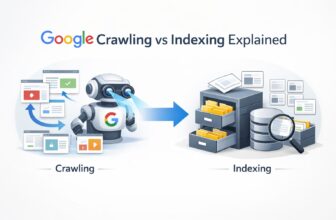
Step 1: Crawling — Discovering Content
Search engines use automated bots called crawlers or spiders to explore the web.
These bots follow links from page to page, collecting information.
Analogy:
Imagine a librarian walking through a giant library, scanning every book and noting what each one is about.
Step 2: Indexing — Organizing Content
Once crawled, your pages are stored in Google’s index, like the world’s largest digital library.
During indexing, Google analyzes:
- Page content and keywords
- Images and alt text
- Internal/external links
- Page structure (headings, HTML)
- Overall purpose and usefulness
If Google can’t index your page, it cannot rank.
Step 3: Ranking — Deciding Which Page Is Best
When someone searches for something, Google pulls answers from its index and ranks them.
Ranking depends on hundreds of factors, including:
- Relevance to the search query
- Content quality and helpfulness
- Page experience (speed, mobile usability)
- Backlinks and reputation
- Freshness of content
- User behavior signals
- E-A-T (Expertise, Authority, Trustworthiness)
Analogy:
Google is like a judge choosing which book provides the best answer to a reader’s question.
3. Major Components of SEO
SEO has three pillars. Think of them as parts of a car:
- On-page SEO — the engine (content & keywords)
- Technical SEO — the mechanics & wiring (site performance)
- Off-page SEO — the fuel (reputation & authority)
Let’s break them down.
On-Page SEO (Everything You Optimize On Your Website)
On-page SEO refers to everything you can directly control on your website to help search engines understand your content and to provide a great experience for your users. Think of it as preparing your home before inviting guests. You want it to look clean, well-organized, easy to navigate, and welcoming. When your website offers a smooth and helpful experience, search engines are more likely to rank your pages higher.
On-page SEO is built on three main goals:
- Helping users find what they need
- Helping search engines understand your content
- Making your information easy to read, engaging, and trustworthy
Below are the core elements of On-Page SEO explained in depth.
A. Content Quality
Content is still the most important ranking factor in modern SEO. Search engines have become smart enough to understand meaning, purpose, and user satisfaction. This means the quality of your content matters far more than how many times you use a keyword.
What makes content high-quality?
Helpful: Your content should directly answer the questions your audience is searching for. People visit your page because they want solutions or clarity. The more valuable and practical your information is, the more search engines reward it.
Accurate: Facts must be correct, especially for sensitive topics like finance, health, legal information, or education. Always verify information and keep content up to date.
Clear and well-structured: Use headings, subheadings, paragraphs, and bullet points to make information easy to scan. Most readers do not read every word. They scan and search for answers quickly.
Comprehensive but easy to understand: Cover a topic fully but use simple, conversational language. Avoid unnecessary jargon. Even complex topics can (and should) be explained in simple terms.
People-first, never keyword-stuffed: Write for humans, not for bots. If your content feels forced or repetitive because of keyword stuffing, both users and search engines will notice.
A useful mindset for content creation
- Stop thinking only about ranking.
- Start thinking about solving.
Ask yourself:
What problem is my reader trying to solve?
How can I make the solution clearer and faster than my competitors?
Content that fulfills user needs naturally ranks better.
B. Keyword Research and Usage
Keywords are the phrases people type into search engines. When you understand what your audience is searching for and how they phrase their questions, you can create content that aligns with their intent.
The keyword process in simple steps
1. Find the right keywords: Use tools like Google Keyword Planner, Ahrefs, Semrush, or Ubersuggest. Identify keywords that match your topic, your business goals, and your audience’s needs.
2. Understand search intent: Users may be looking for information, comparing options, or ready to buy. Aligning your content with their intent improves rankings and engagement.
3. Use keywords naturally throughout your content: Place your primary and secondary
keywords in important areas such as:
- Title
- Headings
- First 100 words
- Main body content
- URL
- Image alt text
- Meta description
Avoid keyword overuse
Using keywords too many times makes your content sound unnatural. This is called keyword stuffing and it can lead to:
- Lower rankings
- Higher bounce rates
- Reduced trust from readers
- Search engine penalties
Your goal is clarity and usefulness, not repetition.
C. Meta Tags
Meta tags are small pieces of information in your page’s HTML that help search engines understand what your page is about. Even though users cannot see them on the page itself, meta tags play a major role in how your page appears in search results.
Important Meta Tags to Focus On
Title Tag: This is the clickable blue headline that appears in Google results. It is the most important on-page element. A strong title tag improves both ranking and click-through rate.
Meta Description: This appears under your title in search results. It summarizes your content in one short paragraph. A compelling description attracts more clicks, even if it does not directly affect rankings.
Meta Robots Tag: This tag tells search engines what to do with your page. It can instruct Google to index the page, skip the page, follow links, or ignore links. Proper use of this tag ensures your important pages are visible.
D. Headings and Structure (H1 to H6)
Headings divide your content into meaningful sections. They help both readers and search engines understand the topic and flow of your content.
Why headings matter
- Make content skimmable: Most users scan before they read. Headings help them find the information they care about quickly.
- Provide logical organization: A well-structured article feels easier to follow and more trustworthy.
- Help search engines understand hierarchy
- Your H1 introduces the main idea.
- H2, H3, and H4 break down supporting ideas.
- Google uses this structure to interpret meaning and relevance.
E. Readability
Readable content improves user satisfaction and keeps people on your site longer. Search engines use engagement signals to understand how useful your page is.
Tips for improving readability
- Use short sentences: Long sentences make content harder to follow, especially on mobile.
- Add spacing and paragraphs
Blocks of dense text are intimidating. Break them up to improve clarity. - Use bullet points and numbered lists
These make key points easier to digest. - Include images, visuals, and examples
Visual elements break monotony and help explain complex ideas. - Write in simple language
Imagine explaining the topic to a beginner or a friend. The simpler, the better.
Readable pages keep users engaged, and engagement increases your ranking potential.
F. User Experience (UX)
User experience refers to how easy and pleasant it is for someone to use your website. Good UX is a major part of on-page SEO because search engines want to recommend websites that offer a positive experience.
Elements of good user experience
Easy navigation: Users should be able to find important pages quickly, such as the home page, service pages, and key resources.
Clean design: Clutter confuses readers. A clean, modern design helps both readability and engagement.
Clear calls to action (CTAs): Guide users on what to do next. A clear and helpful CTA improves conversions and reduces confusion.
Fast page loading: Slow pages frustrate users. Most visitors leave if a website takes more than a few seconds to load. Search engines also give fast websites higher priority. When your site loads quickly, looks clean, and is easy to navigate, both users and search engines notice the improvement.
Technical SEO (Improving the Backend for Better Search Performance)
Technical SEO focuses on everything that happens behind the scenes of your website. Think of it like the foundation and wiring of a house. Even if your home looks beautiful from the outside (great content and design), it will not function well if the plumbing, electricity, or layout is broken.
Technical SEO ensures that:
- Search engines can easily access, understand, and index your website
- Users can load and navigate your site smoothly
- Your pages meet modern web standards for speed, mobile usability, and security
A well-optimized technical foundation allows all your content and SEO efforts to work effectively. Without it, even the best content may struggle to rank. Let’s break down the most important parts of Technical SEO.
A. Site Speed
Website speed is one of the strongest indicators of user experience. People expect pages to load instantly. If your site takes too long, visitors will leave before they even see your content.
Why site speed matters
- Slow-loading pages lead to high bounce rates
- Search engines lower rankings for slow websites
- Fast websites improve conversions and engagement
- Users trust and prefer websites that load quickly
Studies show that even a one-second delay can significantly reduce conversions and customer satisfaction.
How to improve site speed
Here are practical steps anyone can take:
1. Use Google PageSpeed Insights
This free tool gives you specific recommendations for improving performance on both mobile and desktop devices.
2. Choose fast and reliable hosting
Your server plays a major role in how fast your pages load. Good hosting providers offer faster response times and better uptime.
3. Optimize your images
Large images slow down websites.
You can:
- Compress images
- Use modern formats like WebP
- Resize images to appropriate dimensions
4. Use lightweight themes and clean code
Heavy themes or unnecessary plugins can slow down performance. A clean, optimized theme improves loading speed instantly.
5. Enable caching
Caching stores parts of your website so they load faster for returning visitors. Many plugins and hosting providers offer simple caching solutions.
Improving site speed makes your website more user-friendly and strengthens your SEO foundation.
B. Mobile-Friendliness
Today’s internet is mobile-first. People read blogs, shop, browse services, and search from their smartphones more than their desktops.
Why mobile matters
- Over 60 percent of all searches come from mobile devices
- Mobile usability affects rankings for all devices
- Google uses mobile-first indexing, meaning it evaluates the mobile version of your site first
- A poor mobile experience leads to instant exits and lost trust
Key mobile optimization elements
A mobile-friendly site should have:
- Responsive design that adapts to all screen sizes
- Readable text without zooming
- Buttons and links spaced properly
- Fast-loading pages over mobile networks
- Minimal pop-ups or intrusive elements
Mobile optimization is not just about SEO. It directly affects sales, lead generation, and user satisfaction.
C. Site Architecture
Site architecture refers to how your website is organized and connected. A clear structure helps both search engines and users understand where your content is and how to navigate it.
Why good site architecture matters
- Makes it easier for search engines to crawl your pages
- Enhances user experience by reducing confusion
- Helps distribute authority through internal linking
- Supports ranking by grouping related content together
What good architecture looks like
- Logical grouping of content into categories
- Easy-to-follow navigation menus
- Clear page hierarchy
- Short and readable URLs
- Consistent link structure throughout the site
A well-structured site acts like a well-organized library where every book is easy to find.
D. Crawlability
Search engines must be able to crawl your website before they can index or rank it. Crawlability refers to how easily search bots can access your pages.
How to ensure your website is crawlable
1. Check your robots.txt file
This file tells search engines which pages to access and which to avoid. Make sure you are not accidentally blocking important content.
2. Build strong internal linking
Links within your site help Google discover related pages and establish context.
3. Fix broken links
Broken or dead links create roadblocks for both users and search engines.
4. Maintain clean URL structures
Avoid complex or unnecessary parameters. Use simple, descriptive URLs wherever possible.
When your site is easy to crawl, it becomes easier to index and easier to rank.
E. XML Sitemap
An XML sitemap is like a roadmap for search engines, giving them a list of all your important pages.
Why sitemaps matter
- Help Google discover your content faster
- Ensure new pages get indexed quickly
- Useful for large websites, new websites, or sites with deep navigation
Best practices
- Create a sitemap using CMS tools or plugins
- Submit it through Google Search Console
- Keep it clean by removing outdated or unnecessary URLs
A sitemap does not guarantee ranking, but it ensures your pages are visible to search engines.
F. HTTPS and Security
Security is a critical ranking and trust factor. Users expect safe browsing, especially when entering personal or financial information.
Why HTTPS is essential
- Google favors secure websites in search results
- Users trust websites with a secure connection
- Browsers flag non-HTTPS sites as insecure
- Data transmission becomes encrypted and protected
Installing an SSL certificate is no longer optional. It is a basic requirement for every modern website.
G. Structured Data (Schema Markup)
Structured data helps search engines understand your content more accurately. It is a type of code added to your pages that gives additional context and meaning.
Why structured data matters
- Helps Google interpret your content correctly
- Enables rich results in search results
- Increases click-through rates
- Provides users with more information before visiting your page
Examples of rich results enhanced by schema
- Frequently asked questions
- Product details such as price, availability, and ratings
- Step-by-step how-to guides
- Article metadata
- Event details
- Recipes
- Reviews
Schema does not guarantee higher rankings, but it improves your visibility and appearance on the search results page.
H. Canonical URLs
Many websites accidentally create duplicate content, especially when using filters, categories, or multiple versions of the same page. Canonical URLs help solve this problem.
How canonical URLs help
- Tell search engines which version of a page is preferred
- Consolidate ranking signals into one main page
- Prevent duplicate content confusion
- Maintain a clean and organized index
By setting the correct canonical URL, you ensure that Google knows exactly which page to rank.
Technical SEO may not be as visible as content or design, but it plays a vital role in your overall ranking success. When your website is fast, secure, easy to navigate, and understandable to search engines, all your SEO efforts perform better.
A strong technical foundation supports:
- Better user experience
- Higher engagement
- Faster indexing
- Improved keyword rankings
- Long-term SEO growth
Off-Page SEO (Building Trust and Authority Beyond Your Website)
On-page SEO focuses on what you control inside your website. Off-page SEO focuses on everything that happens outside your website that helps build your reputation, authority, and trust in the eyes of search engines and users. Think of off-page SEO as your website’s digital reputation. Just like in real life, people trust a person more when others speak well of them, recommend them, or frequently mention them. The same idea applies to websites. Search engines want to show users the most reliable and credible results, so they look for signals that prove your website is trusted by others on the internet. Off-page SEO is about earning that trust.
Here are the key components.
A. Backlinks (The Strongest Signal of Trust and Authority)
A backlink is simply a link from another website to yours. Search engines treat these links as endorsements. When a reputable site links to your content, it is like that site saying, this page is useful and worth visiting.
Backlinks signal three very important things to search engines:
1. Your website is trustworthy
High quality links show that other site owners or editors believe your information is accurate, helpful, and safe for their audience.
2. Your content is valuable
People do not link to weak, thin, or irrelevant content. They link when your content:
- Solves a problem
- Explains something clearly
- Offers original research or insights
- Provides tools, templates, or examples
- Shares unique opinions or expertise
When others rely on your content, Google sees it as a sign of real value.
3. People recommend your website
Every backlink is a vote.
The more votes you earn from respected sources, the stronger your reputation becomes.
Quality matters more than quantity
One backlink from an authoritative website can be more valuable than hundreds of links from low quality websites. Search engines evaluate:
- The authority of the linking site
- The relevance of the content
- How naturally the link appears
- Whether the site itself is trustworthy
- The context around the link
Backlinks are not about tricks or shortcuts. They are about creating content that others naturally want to reference and share.
B. Brand Mentions and Social Signals
Even when another website mentions your brand name without adding a link, it still helps your reputation.
These are called unlinked brand mentions.
They tell search engines that people are talking about you, writing about your business, or discussing your content. This helps strengthen your brand presence online.
Why brand mentions matter
- They increase your visibility in your industry
- They signal growing authority
- They support your long term brand awareness
- They indicate that users recognize your name
Social signals also play a role. While Google says social media is not a direct ranking factor, active engagement on social platforms:
- Helps more people discover your content
- Increases traffic
- Encourages natural sharing
- Boosts credibility
- Leads to more backlinks over time
Even simple things like comments, shares, and mentions contribute to overall brand trust.
C. Online Reputation (Reviews, Ratings, and Trust Signals)
Your online reputation is a major part of off-page SEO. When people search for your business, they want proof that you are reliable and provide a good experience. Google also uses these signals to understand whether your business deserves to appear higher in search results.
Key reputation signals include
- Customer reviews
- Star ratings
- Testimonials
- Industry awards
- Press coverage
- Expert interviews
- Listings in trusted directories
- Local citations for local businesses
Why reputation matters for SEO
Search engines want to protect users from bad experiences. If your business is well reviewed and frequently recommended by customers or media platforms, Google feels more confident ranking you higher.
For example:
If two restaurants appear in search results and one has 50 good reviews and the other has none, the one with reviews is more likely to be considered trustworthy and relevant.
The same applies to all industries.
Practical tip
Encourage customers to leave honest reviews on platforms such as:
- Google Business Profile
- Facebook
- Yelp
- Zomato or TripAdvisor
- Industry specific directories (ex: Justdial, Practo, Clutch, GoodFirms)
Authentic reviews help both users and search engines trust your brand.
D. Content Promotion (Increasing Reach and Attracting Natural Backlinks)
Publishing good content is important, but it is only the first step.
To maximize its visibility and increase your chances of earning backlinks, content needs effective promotion.
Why promotion matters
- It puts your content in front of a larger audience
- It increases the chance that bloggers, journalists, or creators will reference it
- It drives traffic, which signals usefulness to search engines
- It builds long term awareness and trust
Ways to promote your content
- Share content on social media platforms
- Engage in niche communities and forums
- Participate in guest posting opportunities
- Build relationships with creators and bloggers
- Share infographics and short videos
- Send email newsletters
- Collaborate with influencers in your industry
When people consistently see your content being shared, appreciated, and referenced, your website naturally earns authority. Over time, this leads to more organic backlinks, mentions, and visibility.
Putting it All Together: Why Off-Page SEO Matters
Off-page SEO is not about tricks, shortcuts, or automated link building.
It is about building a strong and trustworthy digital presence.
When you excel in off-page SEO:
- People trust your expertise
- Other websites link to your content
- Customers talk positively about your brand
- Search engines understand that you are a credible authority
- Your rankings improve naturally and sustainably
In short, off-page SEO strengthens your reputation in the broader online ecosystem. Even if your content is outstanding, you need off-page signals to prove to search engines that your website is trusted, respected, and recommended by others.
The SEO Process and Strategy Explained Step by Step (Beginner Friendly, Fully Practical)
Understanding SEO becomes much easier when you look at it as a clear, repeatable process rather than a mysterious or technical activity. In fact, successful SEO follows a cycle of research, planning, creation, optimization, and continuous improvement. Below is a practical, easy-to-follow workflow you can use for any website, whether you are a blogger, small business owner, marketer, or student learning SEO for the first time.
This guide does not just tell you what to do. It explains why each step matters and how you can apply it in real situations.
Step 1: Keyword Research
Finding What Your Audience Is Actively Searching For**
Keyword research is the starting point of every good SEO strategy. It helps you understand what your audience is looking for, how they describe their problems, and what type of content they expect to find.
Why keyword research matters
- It ensures you create content people actually want to read
- It connects your website to real search demand
- It helps you stand out from your competitors
- It saves time by preventing guesswork
Tools you can use for keyword research
- Google Keyword Planner
- Semrush
- Ahrefs
- Moz Keyword Explorer
- Ubersuggest
- Google Search Console (for existing websites)
- Google Trends
What to identify during keyword research
Short-tail keywords
- Broad, competitive searches like “digital marketing” or “laptop”
- High search volume but very tough to rank for
Long-tail keywords
- More specific searches like “best laptop for graphic design under 60000”
- Lower search volume but easier to rank and usually higher conversion
Search intent
It is very important to understand what users truly want.
- Informational intent: users want to learn something
- Commercial intent: users are comparing or researching before buying
- Transactional intent: users are ready to buy or take action
Finding the right keywords with the right intent gives you a strong foundation for everything that comes next.
Step 2: Competitor Analysis
Understanding What Works in Your Industry**
Competitor analysis helps you learn from the websites that are already ranking with success. Instead of guessing what Google likes, you can study real examples and use the insights to improve your own strategy.
What to study during competitor analysis
The topics they cover
This shows which subjects are most important in your niche.
Types of content ranking
Examples include blogs, guides, videos, product pages, FAQs, listicles, or tutorials.
Their backlinks
Quality backlinks reveal which websites are linking to them and why. This helps you identify opportunities for your own link building.
Content gaps
These are topics your competitors are not covering or are covering poorly. Content gaps are perfect opportunities for you to create high-value pages that stand out.
Why competitor research helps
- It shows what is already working well in your market
- It helps you avoid mistakes others made
- It inspires new content ideas
- It gives you realistic targets for your SEO goals
Step 3: Content Planning
Building a Long-Term Strategy Instead of Random Posts**
Content planning is where you turn your research into a structured plan. Without planning, you may create content that is inconsistent, unfocused, or not aligned with your business goals.
Create a content calendar that includes
- A list of topics based on your keyword research
- The primary and secondary keywords for each topic
- The search intent behind each keyword
- Publishing frequency that you can realistically follow
Why content planning matters
- Helps maintain publishing consistency
- Ensures better coverage of important topics
- Keeps your team aligned
- Allows you to build authority over time
A good content strategy is like building a library where each new page strengthens your website as a whole.
Step 4: Content Creation
Producing Helpful, High-Quality Content That Users Trust**
Content creation is at the heart of SEO. No amount of optimization can save weak or unhelpful content. Google rewards content that satisfies users, answers questions clearly, and provides real value.
Principles of high-quality content
- Original and unique
- Well researched and factually accurate
- Easy to read and understand
- Structured with clear headings
- Focused on solving the user’s problem
Elements your content should include
Clear structure
Use headings, subheadings, bullet points, and short paragraphs.
Visuals
Add images, diagrams, charts, screenshots, or infographics to make your content more engaging.
Examples and real stories
These help users understand concepts better.
Internal and external links
Internal links help users navigate your website. External links show you are citing credible sources.
Strong calls to action (CTAs)
Guide users to the next step, such as contacting you, making a purchase, signing up, or reading another article.
Why this step matters
Search engines want to rank content that truly helps people. High-quality content builds trust, keeps users on your page longer, reduces bounce rate, and increases conversions.
Step 5: On-Page Optimization
Optimizing Your Content for Better Rankings and Visibility**
On-page SEO ensures your content is easy for search engines to understand and for users to enjoy. Even excellent content needs proper optimization.
Elements to optimize
Title tags
Write clear, keyword-rich titles that attract clicks.
Meta descriptions
Provide an accurate summary of the page to boost click-through rate.
Images
Compress images for speed and use descriptive alt text for accessibility.
Internal links
Connect related content so users can explore more pages.
URL structure
Use clean, readable URLs that reflect the topic.
Why on-page optimization matters
It helps Google understand what your page is about, improves user engagement, and gives your pages a better chance of ranking on page one.
Step 6: Technical Optimization
Fixing the Back-End Issues That Affect SEO Performance**
Technical SEO ensures search engines can crawl, understand, and index your website without difficulty. It also improves the overall user experience.
Key technical SEO tasks
Improving site speed
Slow websites lose both rankings and customers.
Fixing mobile issues
More than half of all searches come from mobile devices. Your website must perform well on all screen sizes.
Fixing broken links
Broken links frustrate users and create crawl issues.
Identifying duplicate content
Duplicate content confuses search engines and can harm rankings.
Solving indexing problems
Use Google Search Console to ensure important pages are properly indexed.
Why technical SEO is important
Even the best content will not rank if Google cannot access it properly. Technical SEO forms the base that supports all your content and optimization efforts.
Step 7: Link Building
Boosting Authority and Trust with Quality Backlinks**
Backlinks are one of the strongest ranking signals used by search engines. A backlink is simply another website linking to yours. High-quality backlinks show that your website is trustworthy and valuable.
Effective link building strategies
Guest posting
Publish helpful articles on reputable websites in your industry.
Collaborations and partnerships
Work with influencers, creators, or brands to gain exposure.
Resource pages
Find pages that list helpful links and suggest your content.
Broken link outreach
Offer your content as a replacement for links that no longer work.
Creating linkable assets
Long guides, research reports, tools, infographics, or templates are great for earning natural backlinks.
Why link building matters
Backlinks act like votes of confidence. The more quality votes your site receives, the more Google trusts you, and the higher you can rank.
Step 8: Monitoring and Iteration
Tracking Performance and Improving Continuously**
SEO is not something you do once. It is an ongoing cycle of measuring results, identifying what works, and improving continuously.
Tools you can use
Google Search Console
Shows indexing status, search performance, and keyword data.
Google Analytics
Tracks traffic, behavior, and conversions.
Semrush or Ahrefs
Provide detailed keyword, backlink, and competitor insights.
Metrics to track
Keyword rankings
See how your positions change over time.
Organic traffic
Monitor how many users arrive from search engines.
Click-through rate (CTR)
Indicates how well your titles and descriptions attract clicks.
Bounce rate and engagement
Shows whether users find your content valuable.
Conversions
Measures how effectively your content drives actions such as purchases or sign-ups.
The SEO improvement cycle
SEO follows a simple but powerful cycle:
Optimize, measure performance, improve strategies, and repeat.
The more consistently you follow this cycle, the stronger your rankings and traffic become over time.
Ethical SEO (White Hat) vs Black Hat SEO
As you begin your SEO journey, it is extremely important to understand that not all SEO strategies are the same. Some methods help your website grow in a healthy, sustainable way. Others may appear attractive at first because they promise fast results, but they can later harm your website, damage your reputation, and even cause complete removal from search results.
This is why learning the difference between ethical SEO and unethical SEO is crucial.
Think of SEO like long-term fitness. You can get fit naturally and stay healthy, or you can take shortcuts that may give quick results but will eventually cause serious problems. The same logic applies to SEO.
Let us explore both approaches in depth so you know what to adopt and what to avoid.
What Is White Hat SEO and Why It Matters
White Hat SEO refers to honest, ethical, user-focused strategies that follow Google’s rules. These practices improve your website gradually but consistently. They are safe, sustainable, and long-lasting.
White Hat SEO may take time, but the results are stable, trustworthy, and beneficial for both users and your business.
Here are the main elements of White Hat SEO explained with more depth.
1. Creating Helpful, High-Quality Content
High-quality content is the heart of ethical SEO. Google rewards websites that genuinely help users find valuable, accurate, and easy-to-understand information.
What helpful content looks like:
- It answers real questions your audience has
- It solves a problem or teaches something clearly
- It provides accurate and up-to-date information
- It is original and written with expertise
- It is structured well so readers can easily follow
When your content helps real people, Google naturally wants to show it to more people. This creates long-term growth and builds trust.
2. A Clean and Well-Organized Website Structure
Google needs to understand your website clearly in order to rank it. A clean site structure helps both users and search engines.
Good structure includes:
- Logical navigation
- Clear categories and subcategories
- An easy-to-follow menu
- Pages that connect well through internal linking
- Fast loading time
- A mobile-friendly design
When your site is easy to navigate, visitors stay longer and explore more pages. This sends strong positive signals to Google.
3. Genuine Backlink Building
Backlinks are links from other websites to yours. They act like recommendations.
Ethical backlink strategies include:
- Writing valuable content that others want to reference
- Guest posting on reputable sites
- Building relationships with bloggers and industry experts
- Sharing your content on social platforms
- Earning mentions through quality and expertise
Genuine backlinks show that your content is trustworthy and respected across the internet.
4. Following Search Engine Guidelines
Google publishes detailed guidelines about what is allowed and what should be avoided. Ethical SEO always respects these rules.
This includes:
- Proper use of keywords
- Clear and descriptive titles
- Accurate meta descriptions
- Structured data that matches the visible content
- No misleading or manipulative methods
By staying within the guidelines, your rankings are stable and safe.
5. Improving User Experience
White Hat SEO focuses on people first. If users have a positive experience, rankings naturally improve.
A good user experience means:
- Fast page loading
- Mobile-responsive design
- Easy-to-read content
- Helpful visuals
- Safe and secure browsing using HTTPS
- Clear call-to-action buttons
Search engines reward websites that users enjoy visiting.
What Is Black Hat SEO and Why You Should Avoid It
Black Hat SEO refers to unethical or manipulative techniques used to trick search engines into giving higher rankings. These methods may bring quick results, but the risks are very high.
Search engines have become extremely smart. They can detect manipulative behavior quickly, and they do not hesitate to take action. The penalties can be severe.
Black Hat SEO can lead to:
- Loss of rankings
- Sudden traffic drop
- Penalties from Google
- Complete removal from search results
- Damage to your brand reputation
Let us look at the most common Black Hat techniques so you can identify and avoid them.
1. Keyword Stuffing
This happens when someone repeats a keyword too many times in an unnatural way, hoping to rank higher.
For example:
“Best digital marketing agency offers the best digital marketing services because our digital marketing agency is the best digital marketing agency.”
This harms readability, annoys users, and signals manipulation to Google.
Ethical SEO uses keywords naturally within helpful content.
2. Buying Backlinks
Purchasing backlinks or participating in link schemes is a serious violation of Google’s policies.
These links often come from:
- Low-quality sites
- Spam networks
- Irrelevant directories
- Automated tools
Google can detect such patterns easily and penalizes websites involved in them. Ethical SEO focuses on earning backlinks, not buying them.
3. Cloaking
Cloaking is a manipulative tactic where a website shows one version of a page to Google and a different version to users.
For example:
Showing Google keyword-rich text but showing users a completely different page.
This is strictly prohibited by Google and can lead to immediate removal from search results.
4. Duplicate Content
Copying content from other websites and publishing it as your own is harmful for several reasons.
Problems with duplicate content:
- Google may ignore or devalue the page
- It provides no unique value
- It harms your credibility
- It can lead to copyright issues
Original content always performs better.
5. Hidden Text and Hidden Links
Some websites try to hide text by making the font color match the background or by setting the font size to zero.
This technique is used to insert keywords without letting users see them.
This is a direct violation of Google’s rules and is easily detectable.
6. Spammy Links and Comment Spam
Posting irrelevant links in forums, blogs, or comment sections only harms your reputation and can attract penalties.
Google is well equipped to identify spammy link-building behavior.
Why Black Hat SEO Never Works in the Long Run
Black Hat methods might produce a short-lived improvement, but the long-term consequences are harmful.
Google’s algorithms evolve regularly. They are designed to protect users from manipulation and low-quality content. Once spotted, Black Hat strategies are punished quickly, and recovering from these penalties can take months or even years.
The safer and smarter choice is to build a long-term SEO strategy built on trust, quality, and user value.
Google’s Core Message: Focus on People First
Google openly advises website owners to create content for users instead of search engines. When you build helpful, clear, truthful, and user-friendly content, search engines naturally reward you.
Ethical SEO:
- Builds trust
- Creates sustainable rankings
- Supports long-term business goals
- Improves customer experience
- Strengthens your brand reputation
Black Hat SEO:
- Creates instability
- Damages trust
- Leads to penalties
- Threatens your entire website
- Harms your brand image
In simple words:
Respect the user. Respect the guidelines. Quality always wins.
Measuring SEO Success (A Complete, Beginner-Friendly Guide)
SEO is not something you set once and forget. It is a continuous, evolving process that requires regular monitoring to understand what is working, what needs improvement, and where new opportunities lie. Measuring SEO success helps you make smarter decisions, refine your strategy, and ensure you are moving closer to your business goals.
Think of SEO like a fitness journey. You do not rely on just one measurement. You look at energy levels, weight, muscle strength, stamina, and other indicators. Similarly, SEO success depends on multiple metrics that together show the health of your website and the effectiveness of your optimization efforts.
Below are the most important metrics you should track, explained in a simple, people-first way.
A. Organic Traffic
Organic traffic refers to the number of visitors who land on your website directly from search engines like Google. This is one of the most important indicators of SEO performance because it reflects how visible your website is and how much interest you attract without paying for advertising.
You can check organic traffic using tools like:
- Google Analytics
- Google Search Console
- SEMrush
- Ahrefs
Why it matters
- Shows whether your SEO efforts are bringing more people to your website
- Helps you understand which pages perform best
- Indicates whether your keywords, content, and technical SEO are working
If your organic traffic grows consistently, it usually means your website is becoming stronger and more trusted by search engines.
B. Keyword Rankings
Keyword rankings refer to your position in search results for specific keywords your audience is searching for. Ranking on the first page of Google is valuable because most users never scroll past it.
You can track rankings daily, weekly, or monthly using:
- Google Search Console
- SEMrush
- Ahrefs
- Moz
Why it matters
- Helps you understand which pages are gaining momentum
- Shows whether your optimization efforts are effective
- Reveals opportunity areas such as keywords close to page one
Improving rankings often leads to more clicks, more traffic, and more conversions.
C. CTR (Click-Through Rate)
CTR measures the percentage of users who click your page after seeing it in Google search results.
For example:
If 100 people see your page in search results and 15 click it, your CTR is 15 percent.
CTR is influenced by:
- Your page title
- Your meta description
- Whether your content meets search intent
- Rich results (like FAQ schema)
Why it matters
A high CTR means:
- Your title is compelling
- Your page looks relevant
- Users trust your content
A low CTR suggests you need to improve how your listing appears in search results. This is one of the quickest wins in SEO because sometimes a simple title rewrite can significantly improve clicks.
D. Bounce Rate
Bounce rate shows the percentage of visitors who leave your website without clicking anything else or interacting further.
A high bounce rate can mean:
- Your page did not match the visitor’s intent
- Your content was not helpful
- Your page took too long to load
- Navigation was confusing
- The design was not user-friendly
Why it matters
Bounce rate helps you understand:
- Whether your content satisfies the reader
- Whether your page experience needs improvement
- Whether the right audience is landing on your site
A lower bounce rate usually indicates a better user experience and more engaged visitors.
E. Dwell Time or Time on Page
Dwell time is the amount of time a user spends on your page before returning to search results. Time on page measures how long they stay before clicking elsewhere on your site.
Both metrics help indicate whether your content is engaging.
Why it matters
- Longer dwell time suggests the user found your content interesting, helpful, or valuable
- It signals to search engines that your page is relevant
- It helps you identify which types of content keep users engaged
If people stay longer, they are more likely to trust your content, explore your site, and convert into leads or customers.
F. Conversions
Conversions are the actions you want visitors to take. Depending on your business goals, conversions may include:
- Making a purchase
- Filling out a contact form
- Signing up for a newsletter
- Downloading a guide or resource
- Booking a consultation
- Creating an account
Ultimately, conversions represent real business growth.
Why it matters
SEO is not just about ranking or traffic. It is about generating value.
A page might receive a lot of traffic, but if no one takes action, it may not be helping your business. Tracking conversions shows:
- Which pages generate the most results
- Which keywords bring high-intent users
- Where visitors drop off
- How effectively your content nurtures users toward a goal
This is one of the most important indicators of SEO success.
G. Backlinks and Domain Authority
Backlinks are links from other websites pointing to your site. They act as trust signals, showing search engines that your content is credible and valuable.
Domain Authority (DA), Domain Rating (DR), and similar scores (depending on the tool you use) estimate how authoritative your website is. While not official Google metrics, they help you understand your site’s perceived strength in comparison to competitors.
Why backlinks matter
- They improve your site’s reputation
- They help pages rank higher
- They increase referral traffic
- They show you are a trusted source
Why Domain Authority matters
- Helps compare your website to competitors
- Shows how competitive you are in search results
- Helps predict ranking potential
Growing authority is a long-term SEO goal and one of the biggest factors behind strong rankings.
Measuring SEO success is not about focusing on one single metric. It is about understanding how all these signals work together to show the overall performance of your website.
A successful SEO strategy improves:
- Visibility
- Traffic
- Engagement
- Conversions
- Authority
Tracking these metrics regularly helps you make data-driven decisions, fix weak areas, and strengthen what works best.
Common SEO Challenges and Mistakes Beginners Should Avoid
Learning SEO can feel overwhelming in the beginning. There are many moving parts, and it’s easy to make mistakes without realizing it. The good news is that most SEO challenges are predictable and can be fixed once you understand them. Below is a detailed breakdown of the most common problems beginners face, why they matter, and how to avoid them.
1. Publishing Thin or Shallow Content
Many new website owners write content that is either too short, too vague, or simply adds nothing new to the topic. Search engines prefer content that truly helps the reader, answers questions clearly, and provides valuable insights.
Why it hurts your SEO:
- Search engines may not consider your page helpful or trustworthy.
- Users leave the page quickly, causing high bounce rates.
- Competitors with richer content outrank you every time.
What to do instead:
- Go deeper into topics with examples, explanations, and real insights.
- Provide actionable steps or solutions.
- Answer all related questions a user might have.
- Think about what a beginner would want to know and include it.
2. Slow Loading Pages
Online users have zero patience for slow websites. If your page takes longer than a few seconds, most visitors simply leave and choose another result.
Why it hurts your SEO:
- Search engines prioritize fast websites because they offer better user experience.
- Slow pages discourage users, decreasing engagement and conversions.
What to do instead:
- Compress images.
- Use faster hosting.
- Reduce heavy scripts or unnecessary plugins.
- Use caching.
A fast website creates a smooth, enjoyable experience that users and search engines both appreciate.
3. Not Optimizing for Mobile Users
Most people use their mobile phones for searching, reading, browsing, and even purchasing. If your website is hard to read or navigate on mobile, you lose a huge part of your audience.
Why it hurts your SEO:
- Search engines use mobile-first indexing, meaning they look at the mobile version of your site first.
- Poor mobile experience leads to reduced rankings and frustrated visitors.
What to do instead:
- Use a responsive design that adapts to all screen sizes.
- Keep text readable without zooming.
- Make buttons easy to click.
- Avoid layouts that shift when the page loads.
A mobile-friendly site is essential for modern SEO success.
4. Ignoring Technical Issues
Many beginners focus only on content and keywords while completely forgetting about the technical side of SEO. Problems like broken links, missing sitemaps, duplicate content, or incorrect indexing settings can prevent your site from ranking at all.
Why it hurts your SEO:
- Search engines might not crawl or index important pages.
- Duplicate or confusing content structures lower your site’s value.
- Technical errors weaken your overall site health.
What to do instead:
- Regularly run technical audits using tools like Google Search Console.
- Fix crawl errors.
- Repair or redirect broken links.
- Keep your site structure clean and organized.
You do not need to be a developer. Basic technical hygiene goes a long way.
5. Weak Internal Linking
Internal links guide visitors and search engines to important pages on your site. Many beginners either ignore internal linking or use it incorrectly.
Why it hurts your SEO:
- Search engines struggle to understand your site’s structure.
- Important pages do not get enough authority or visibility.
- Users might miss valuable content you already have.
What to do instead:
- Link to related articles naturally within the content.
- Use descriptive anchor text.
- Create topic clusters and hub pages.
Think of internal links as roads connecting all the important places on your website.
6. Over-Optimizing Keywords
Beginners often think that repeating keywords many times will help them rank faster. This leads to keyword stuffing, unnatural sentences, and poor readability.
Why it hurts your SEO:
- Users find the content uncomfortable or annoying to read.
- Search engines detect artificial keyword usage and may reduce rankings.
- The content becomes less helpful and less trustworthy.
What to do instead:
- Use keywords naturally and only where they make sense.
- Focus more on answering the user’s problem.
- Include related terms and phrases instead of repeating the same word.
Good SEO writing sounds human, not robotic.
7. Not Having a Clear Content Strategy
Publishing content randomly without planning is one of the biggest mistakes beginners make. SEO requires consistency, research, and direction.
Why it hurts your SEO:
- You end up targeting the wrong keywords.
- Content feels unorganized and scattered.
- Long-term ranking becomes difficult.
What to do instead:
- Create a content calendar.
- Group topics based on themes and user intent.
- Plan content around what your audience actually searches for.
A strategy gives your SEO efforts purpose and structure.
8. Expecting Instant Results
SEO takes time. Many beginners get discouraged if they do not see results in a week or a month.
Why it hurts your SEO:
- People quit too early.
- They shift strategies too often.
- They lose motivation before the SEO engine even starts working.
What to do instead:
- Understand that SEO is a long-term investment.
- Stay consistent for at least 3 to 6 months before judging results.
- Keep improving your content, site performance, and links.
Patience is part of success in SEO.
9. Ignoring User Intent
Beginners often choose keywords based on high search volume instead of understanding what the user actually wants.
Why it hurts your SEO:
- You attract the wrong audience.
- Visitors leave quickly because your content does not match their expectations.
- Your rankings drop due to poor engagement.
What to do instead:
- Understand the purpose behind a search query.
- Create content that directly answers the question or solves the problem.
- Match your content type to the user’s goal such as learning, comparing, or buying.
SEO today is about relevance and usefulness, not just keywords.
10. Poor Site Navigation
If users cannot find what they want on your website, they leave. A confusing structure makes your content hard to access and weakens the user experience.
Why it hurts your SEO:
- High bounce rates signal poor quality.
- Search engines cannot understand which pages matter most.
- Users get frustrated and lose trust.
What to do instead:
- Use simple menus.
- Keep your categories organized.
- Ensure every important page is only a few clicks away.
- Avoid clutter and unnecessary elements.
Clear navigation helps both people and search engines explore your site with ease.
These challenges are extremely common among beginners, but they are all fixable. Once you understand why each mistake matters and how to avoid it, your SEO journey becomes much smoother and far more effective. Small improvements made consistently can transform your website into a strong, reliable, and search-friendly asset.
Why SEO Still Matters in 2026 and Beyond (Trends You Must Know)
There is a common misconception that SEO is becoming less important because AI tools are growing, search platforms are changing, and user behavior is evolving. In reality, SEO has become even more important, because people are searching more than ever, and search engines are becoming smarter at understanding what users truly need.
SEO is no longer just about ranking for a keyword. Today it is about delivering the highest quality information, the best experience, and the most trustworthy content. As long as people continue to search for answers, SEO will remain one of the strongest and most reliable digital strategies.
Below are the major trends shaping SEO in 2026 and the years ahead, along with what learners should know.
A. User Intent and Semantic Search
In the early days of SEO, search engines simply matched keywords from a search query to keywords on a webpage. This approach no longer works. Today, Google and other search engines deeply understand the meaning behind a search, not just the words used.
This shift is known as semantic search.
Semantic search focuses on:
- The intent behind the query
- The context surrounding the query
- The relationship between topics
- The user’s search behavior and needs
For example, if someone types “best running shoes for beginners”, Google understands they want a comparison of options, expert recommendations, and possibly price ranges or comfort levels. It does not just look for a page with those exact words. It looks for a page that answers the deeper question.
What this means for SEO learners:
- Writing for humans is more important than writing for search engines
- Content must answer real questions clearly and completely
- Google rewards pages that satisfy the searcher’s intent
- Understanding the meaning behind a keyword is essential
SEO today is less about keyword density and more about topic depth, clarity, and usefulness.
B. E A T (Expertise, Authoritativeness, Trustworthiness)
E A T is one of the most important quality signals in modern SEO. Google relies on it to determine whether a piece of content is reliable and trustworthy. This is especially important for topics that can impact a user’s finances, safety, or well-being.
These sensitive categories are often referred to as Your Money or Your Life (YMYL) topics.
Industries where E A T matters the most include:
- Finance
- Health and wellness
- Government services
- Legal advice
- News and journalism
- Education and public information
For example, a medical article written by a verified doctor will always outperform a generic article written by an unknown source. Similarly, a legal guide written by a licensed lawyer carries more authority than an opinion-based article.
To align with E A T, websites should:
- Highlight author credentials
- Provide accurate and sourced information
- Display trust signals such as reviews, testimonials, and citations
- Keep sensitive content updated and error-free
- Build a strong brand reputation online
E A T helps search engines protect users from misinformation. As misinformation grows, Google becomes stricter about this, making E A T more important every year.
C. Core Web Vitals and User Experience
SEO has evolved from purely text-based optimization to a full website experience. Google now measures how users interact with your website and uses these metrics to determine rankings.
The three primary Core Web Vitals are:
Largest Contentful Paint
This measures how quickly the main content of a page loads.
First Input Delay
This measures how quickly a page responds when a user interacts with it.
Cumulative Layout Shift
This measures how stable the layout is as the page loads.
Poor performance in these areas frustrates users, increases bounce rates, and reduces conversions. Google prioritizes pages that load fast, respond instantly, and offer a visually stable experience.
For SEO learners, this means:
- Speed optimization is not optional
- Mobile performance is more important than desktop
- Clean design improves both rankings and engagement
- Technical SEO must support strong user experience
A fast, smooth, mobile-friendly website is now a ranking advantage.
D. Voice Search and Conversational Queries
With the growing popularity of smart speakers, virtual assistants, and mobile voice search, users are searching in a more natural, conversational way.
Voice searches often sound like:
- What is the best budget smartphone for students
- How do I make homemade pizza dough
- Where is the nearest car repair shop
- What is the interest rate for home loans this year
These queries are longer and more question-based than traditional text searches. They often begin with words like what, how, where, and why.
What this means for SEO:
- Content must answer questions clearly
- FAQ pages help capture voice search
- Long-tail keywords are more valuable
- Natural language matters more than exact-match keywords
As voice-enabled devices grow, websites that provide conversational, helpful information will capture a large share of voice-based traffic.
E. AI-Assisted Search and the Rise of SGE
SGE, also known as Search Generative Experience, represents Google’s evolving approach to using AI to summarize results directly on the search page. This does not replace SEO. Instead, it changes how SEO works.
AI-assisted search may:
- Display quick summaries of answers
- Highlight key pages for deeper reading
- Pull information from high-quality, authoritative sources
- Prefer well-structured and trustworthy content
Some people fear that AI results will eliminate clicks. However, data shows that users still click to learn more, especially when:
- They want detailed or trustworthy information
- They want expert-backed guidance
- They need product comparisons
- They need step-by-step explanations
The biggest advantage here is that helpful content continues to win. AI depends on high-quality content to create summaries, which means websites with strong SEO become even more important in the AI-driven search landscape.
To stay competitive:
- Create content that answers real questions
- Use clear structure and headings
- Provide value that AI summaries cannot replace
- Focus on accuracy and depth
AI may change how search results look, but it will always need reliable, helpful content from real creators.
SEO still matters because people will always search. As long as users continue to look for answers, solutions, products, and reviews, search engines will need high-quality content to serve those needs.
The tools and technology behind search may evolve, but the purpose of SEO remains the same. It helps connect users with trustworthy information and helps businesses reach the right audience. The future of SEO belongs to those who focus on clarity, usefulness, and a genuine desire to help their users.
Tools and Resources for SEO Learners
Learning SEO becomes significantly easier when you have the right tools and trusted resources. Whether you want to analyze website performance, track rankings, research keywords, or simply understand how search engines work, these tools can speed up your learning and make your SEO journey more effective. Below is a complete list of essential free tools, paid tools, and educational resources, along with short descriptions and official website links. These will help you practice SEO hands-on, build real skills, and stay updated with industry changes.
SEO Tools and Resources Table
| Category | Tool / Resource Name | Description | Official Website Link |
| Free Tools | Google Search Console | Helps you monitor indexing, search performance, and website health. | https://search.google.com/search-console |
| Google Analytics | Tracks website traffic, user behavior, conversions, and engagement. | https://analytics.google.com | |
| Google Keyword Planner | Free keyword research tool inside Google Ads for discovering search terms. | https://ads.google.com/home/tools/keyword-planner | |
| PageSpeed Insights | Measures your website’s speed and Core Web Vitals for mobile and desktop. | https://pagespeed.web.dev | |
| Schema.org | Provides structured data markup guidelines for rich results. | https://schema.org | |
| Paid Tools | Semrush | All-in-one SEO suite with keyword research, backlinks, competitor analysis, audit tools, and more. | https://www.semrush.com |
| Ahrefs | Popular SEO tool for backlink analysis, content research, site audits, and keyword tracking. | https://ahrefs.com | |
| Moz Pro | SEO platform with keyword explorer, site audits, link research, and rank tracking. | https://moz.com | |
| Yoast SEO (WordPress Plugin) | Helps optimize on-page SEO, XML sitemaps, readability, and metadata in WordPress. | https://yoast.com | |
| Screaming Frog SEO Spider | Powerful website crawler for audits, broken links, redirects, and technical SEO checks. | https://www.screamingfrog.co.uk/seo-spider | |
| Learning Resources | Google Search Central Blog | Official Google updates, best practices, and documentation for SEO. | https://developers.google.com/search/blog |
| Moz Beginner’s Guide to SEO | One of the most trusted and beginner-friendly SEO guides available online. | https://moz.com/beginners-guide-to-seo | |
| Semrush Academy | Free SEO and digital marketing courses with certifications. | https://www.semrush.com/academy | |
| Yoast SEO Blog | Helpful tutorials, SEO tips, and WordPress optimization guides. | https://yoast.com/seo-blog | |
| Search Engine Land Guides | Industry-leading publication with expert SEO news, tips, and guides. | https://searchengineland.com/library |
Summary / Key Takeaways
- SEO = improving your visibility in search engines
- Search engines crawl → index → rank
- Three pillars: on-page, technical, off-page
- SEO requires research, strategy, and optimization
- White-hat SEO always wins long-term
- SEO success = more traffic, leads, and authority
- It’s a long-term investment with compounding rewards
Conclusion
SEO is not just a marketing tactic, but a long-term growth strategy that helps websites earn visibility, trust, and sustainable traffic. As search engines evolve with AI, better understanding of user intent, and new ranking systems, the core principle of SEO remains the same: create helpful, valuable, and trustworthy content that genuinely serves your audience. By mastering on-page, technical, and off-page optimization and by following ethical, people-first practices, you can build a strong online presence that grows over time. No matter how the digital landscape changes, businesses and creators who prioritize user experience, clarity, and relevance will always remain visible. With the knowledge, tools, and practical steps covered in this module, you are now ready to apply SEO confidently and begin building meaningful results for your website or brand.